

Wireless signals can be used not only for communication but also for sensing. Wireless sensing enables a wide variety of important applications, including localization, motion tracking, environmental sensing, and health monitoring. Moreover, wireless sensing is expected to play a critical role in 6G to facilitate directional communication at high frequencies.
This workshop invites leading experts across the world to discuss recent progress, share their thoughts, and envision the future of wireless sensing. Featured speakers will share their latest research on Wireless Sensing for Healthcare, Artificial Intelligence of Things, and Smart Sensing and Applications. Future research directions and collaboration opportunities will be explored to advance research in wireless sensing. Professors, researchers, and graduate students are sincerely invited to join us to exchange ideas and explore future collaborations.
Speakers
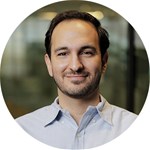

Shyam Gollakota
Professor, Paul G. Allen School of Computer Science & Engineering
University of Washington

Xiang-Yang Li
Professor & Executive Dean, School of Computer Science & Technology
University of Science & Technology of China




Agenda
| Time | Session |
|---|---|
| 8:00 AM | Welcome and Opening Remarks Lidong Zhou, Microsoft Research Asia Lili Qiu, Microsoft Research Asia |
| Session 1: Sensing for Healthcare | |
| 8:20 AM | Wireless Seismocardiography: Enabling Long-Term Non-Contact Cardiovascular and Stress Monitoring Fadel Adib, MIT The seismocardiogram (SCG) is a recording of a human heart’s mechanical activity, which can be used to diagnose and monitor various cardiovascular conditions including myocardial infarction, coronary heart disease, and ischemia. This talk will describe a technology that can capture SCG recordings without requiring any contact with the human body. The technology operates by analyzing the reflections of millimeter-wave radar signals off the human body using a hybrid architecture of signal processing and deep learning. The talk will describe the fundamentals of the technology and demonstrate how it can accurately recover SCG waveforms and the timings of five different micro-cardiac events. The talk will also touch on how the technology can be used for long-term stress monitoring. I will conclude the talk by describing how the fundamental innovations underlying our technologies extend beyond health monitoring, and how my team also applies them to help address global problems in oceans, supply chain, and ecology. |
| 8:55 AM | Melding bits, biology and healthcare Shyam Gollakota, University of Washington This is an exciting time to be a wireless and mobile systems researcher where we are not only blurring the boundaries between reality and science fiction but also creating technology that can positively impact society. In this talk, I will first show how we can create futuristic technology where bits and biology meld by designing the Internet of biological and bio-inspired things. Specifically, inspired by dandelion seeds, I will present battery-free wireless sensors that can be dispersed in the wind to create a large-scale sensor network. I will also show how to integrate embedded systems with living organisms (e.g., bees) and have real-world impact by helping find the nests of invasive “murder” hornets. I will then shift gears and make a case for how our community has an incredible opportunity to thoughtfully impact society by creating intelligent mobile systems that democratize healthcare. I will provide examples where we can use smartphones and smart speakers to detect sleep apnea, opioid overdoses, irregular heart rhythms and cardiac arrests by running software on devices that already exist in millions of homes. Finally, I will demonstrate how mobile technology has the potential to bring healthcare to millions of people in middle and low-income countries by creating screening tools for ear infections, new-born hearing loss as well as performing blood clot testing at a fraction of the cost. |
| Session 2: Artificial Intelligence of Things | |
| 9:30 AM | Artificial Intelligence of Things Yunhao Liu, Tsinghua University Over the last few years, the applications of artificial intelligence technology are becoming more and more approved by the society, as the number of people slowly warming up to the idea of including AI in our everyday lives increases. On the other hand, with the popularity of IoT (Internet of Things), the amount of data people need to analyze grows. The analysis of these data relies more on AI technology. As a bridge between the physical world and the digital world, IoT also provides new opportunities to apply to AI technology. As a result, the birth of AIoT (artificial intelligence of things), the combination of AI and IoT, is inevitable. AIoT has unwittingly penetrated every aspect of human life, from small mobile applications and smart homes to large massive group analysis, city management, and policymaking. However, AIoT, like any other technological inventions, brings not only crucial and new opportunities but also challenging obstacles to human beings at the same time. Is AIoT our new Pandora’s box? |
| 10:05 AM | AIOT: Wireless Smart Sensing and Edge Computing Xiang-Yang Li, University of Science & Technology of China Some core challenges of the Artificial Intelligence of Things (AIOT) systems are to overcome low-power cross-domain deep sensing, reliable network connectivity in complex scenarios, and intelligent computing. In this report, I will first overview some of the current challenges of AIOT and share some of our team’s preliminary research results and explorations in the field of AIOT, including 1) intelligent sensing based on low-power (even battery-free) technologies, using RFID-based, wearable or battery-free devices 2) intelligent edge computing that supports data and computing offloading. |
| Session 3: Smart Sensing and Applications | |
| 10:40 AM | Understanding the Position Dependent Problem in WiFi/4G/5G Sensing: Theory and Applications Daqing Zhang, Peking University With advantages such as low cost, non-intrusiveness and less privacy concern, WiFi/4G/5G based wireless sensing has attracted a lot of attention from both academia and industry in many application domains. However, duo to the CSI signal pattern variation of a certain activity caused by the location, heading and speed change, i.e., the so-called position dependent problem, most of the WiFi/4G/5G based human activity recognition systems developed fail to work robustly in real settings. In this talk, I will introduce the Fresnel zone model as a new theoretic basis for device-free and contactless human sensing with WiFi/4G/5G signals. The Fresnel-zone based sensing theory not only reveals the relationship among the WiFi CSI signal, the distance between two transceivers, the sensing target’s relative location/heading and velocity with respect to the transceivers, but also intuitively explains how the location/heading affects the received signal pattern in time and frequency domain. Building on the Fresnel zone model, we further investigate the dependency of a target’s velocity estimation accuracy on its location and heading, and derive a closed-form solution to understand the fundamental limitation of velocity estimation. I will use human respiration monitoring, gesture recognition and indoor human tracking as application examples to demonstrate the effectiveness of our proposed position independent sensing solutions. |
| 11:15 AM | Wireless Sensing: Challenges and Future Directions Jie Xiong, University of Massachusetts Amherst Wireless technologies have achieved great success in data communication. In the last few years, wireless signals (e.g., WiFi) have been exploited for sensing purposes, enabling exciting applications such as passive localization, contact-free gesture recognition and vital sign monitoring. Although promising progress has been achieved, quite a few practical challenges still remain and need to be tackled before wireless sensing can be adopted in real life. In this talk, I introduce two practical challenges associated with wireless sensing: (i) there exists severe audible leakage when ultrasound is employed for acoustic sensing and (ii) the underlying principle of RF sensing is undermined when the RF device starts moving (e.g., placed on a robot or worn by a person). At the end of the talk, I discuss some future research directions on wireless sensing. |
| 11:50 AM | Acoustic Based Active & Passive Sensing and Applications Lili Qiu, Microsoft Research Asia Video games, Virtual Reality (VR), Augmented Reality (AR), Smart appliances (e.g., smart TVs and drones) and online meetings all call for a new way for users to interact and control them. Motivated by this observation, we have developed a series of novel acoustic sensing technologies by transmitting specifically designed signals and/or using signals naturally arising from the environments. We further develop a few interesting applications on top of our motion tracking technology. |
| 12:25 PM | Closing Remarks |
Workshop organizers
Lili Qiu, Microsoft Research Asia
Lily Sun, Microsoft Research Asia
Microsoft’s Event Code of Conduct
Microsoft’s mission is to empower every person and every organization on the planet to achieve more. This includes events Microsoft hosts and participates in, where we seek to create a respectful, friendly, and inclusive experience for all participants. As such, we do not tolerate harassing or disrespectful behavior, messages, images, or interactions by any event participant, in any form, at any aspect of the program including business and social activities, regardless of location.
We do not tolerate any behavior that is degrading to any gender, race, sexual orientation or disability, or any behavior that would violate Microsoft’s Anti-Harassment and Anti-Discrimination Policy, Equal Employment Opportunity Policy, or Standards of Business Conduct. In short, the entire experience at the venue must meet our culture standards. We encourage everyone to assist in creating a welcoming and safe environment. Please report (opens in new tab) any concerns, harassing behavior, or suspicious or disruptive activity to venue staff, the event host or owner, or event staff. Microsoft reserves the right to refuse admittance to or remove any person from company-sponsored events at any time in its sole discretion.