

Microsoft Research
AI Frontiers
News & features
Phi-4-reasoning-vision and the lessons of training a multimodal reasoning model
| Jyoti Aneja, Michael Harrison, Neel Joshi, Tyler LaBonte, John Langford, and Eduardo Salinas
We are pleased to announce Phi-4-reasoning-vision-15B, a 15 billion parameter open‑weight multimodal reasoning model, available through Microsoft Foundry (opens in new tab), HuggingFace (opens in new tab) and GitHub (opens in new tab). Phi-4-reasoning-vision-15B is a broadly capable model that…

Fara-7B: An Efficient Agentic Model for Computer Use
| Ahmed Awadallah, Akshay Nambi, Alexey Taymanov, Aravind Rajeswaran, Corby Rosset, Hussein Mozannar, Spencer Whitehead, Vibhav Vineet, Yash Lara, Yash Pandya, and Andrew Zhao
Fara-7B is our first agentic small language model for computer use. This experimental model includes robust safety measures to aid responsible deployment. Despite its size, Fara-7B holds its own against larger, more resource-intensive agentic systems.
In the news | Venture Beat
Microsoft’s Fara-7B is a computer-use AI agent that rivals GPT-4o and works directly on your PC
Microsoft has introduced Fara-7B, a new 7-billion parameter model designed to act as a Computer Use Agent (CUA) capable of performing complex tasks directly on a user’s device. Fara-7B sets new state-of-the-art results for its size, providing a way to…

Magentic Marketplace: an open-source simulation environment for studying agentic markets
| Gagan Bansal, Wenyue Hua, Zachary Huang, Adam Fourney, Amanda Swearngin, Chinmay Singh, Brendan Lucier, Jake Hofman, Markus Mobius, Will Epperson, Tyler Payne, Akshay Nambi, Archana Yadav, Maya Murad, Matthew Vogel, Alex Slivkins, Dan Goldstein, David Rothschild, Hussein Mozannar, Nicole Immorlica, Subbarao Kambhampati, Eric Horvitz, and Saleema Amershi
AI agents are poised to transform digital marketplaces. To explore what can happen when AI agents interact and transact at scale, we built Magentic Marketplace, an open-source simulation environment for studying agentic market designs.
In the news | TechCrunch
Microsoft built a fake marketplace to test AI agents — they failed in surprising ways
On Wednesday, researchers at Microsoft released a new simulation environment designed to test AI agents, along with new research showing that current agentic models may be vulnerable to manipulation. Conducted in collaboration with Arizona State University, the research raises new questions about…
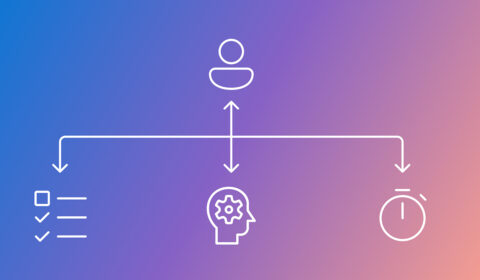
Tell me when: Building agents that can wait, monitor, and act
| Hussein Mozannar, Matheus Kunzler Maldaner, Maya Murad, Jingya Chen, Gagan Bansal, Rafah Hosn, and Adam Fourney
SentinelStep enables AI agents to handle monitoring tasks that run for hours or days, like watching for emails or tracking prices. It works by managing when agents should check and their context, avoiding wasted resources and missed updates.

Tool-space interference in the MCP era: Designing for agent compatibility at scale
| Adam Fourney, Tyler Payne, Maya Murad, and Saleema Amershi
As agentic AI ushers in a new era marked by tool expansion, systems are converging, and complexity is rising. Microsoft Research explores the Model Context Protocol (MCP) as a new standard for agent collaboration across fragmented tool ecosystems.

Dion: the distributed orthonormal update revolution is here
| Kwangjun Ahn and John Langford
Dion is a new AI model optimization method that boosts scalability and performance over existing leading methods by orthonormalizing only a top rank subset of singular vectors, enabling more efficient training of large models such as LLaMA-3 with reduced overhead.
Phi-4-reasoning is a 14-billion parameter model specialized in complex reasoning tasks. It is trained using supervised finetuning (SFT) on diverse prompts and reasoning demonstrations from o3-mini. The model generates detailed reasoning chains and leverages inference-time compute effectively. Phi-4-reasoning-plus, an enhanced…