

Microsoft Research Lab – India
News & features

MMCTAgent: Enabling multimodal reasoning over large video and image collections
| Akshay Nambi, Kavyansh Chourasia, and Tanuja Ganu
MMCTAgent enables dynamic multimodal reasoning with iterative planning and reflection. Built on Microsoft’s AutoGen framework, it integrates language, vision, and temporal understanding for complex tasks like long video and image analysis.

Research Focus: Week of May 7, 2025
In this issue: New research on compound AI systems and causal verification of the Confidential Consortium Framework; release of Phi-4-reasoning; enriching tabular data with semantic structure, and more.

Research Focus: Week of April 21, 2025
In this issue: our CHI 2025 & ICLR 2025 contributions, plus research on causal reasoning & LLMs; countering LLM jailbreak attacks; and how people use AI vs. AI-alone. Also, SVP of Microsoft Health Jim Weinstein talks rural healthcare innovation.

LLMs for safe low-level programming
Aseem Rastogi and Pantazis Deligiannis talk about two technical results from ICSE 2025 on using large language models (LLMs) for safe low-level programming. The results demonstrate LLMs inferring machine-checkable memory safety invariants in legacy C code and how LLMs assist…

Microsoft Research and Physics Wallah team up to enhance AI-based tutoring
| Chris Stetkiewicz
Limited resources, geography, and economic factors present barriers to quality education for many students in India. Learn how Microsoft Research is collaborating with Physics Wallah to make AI-based tutoring more accurate, reliable, and affordable.
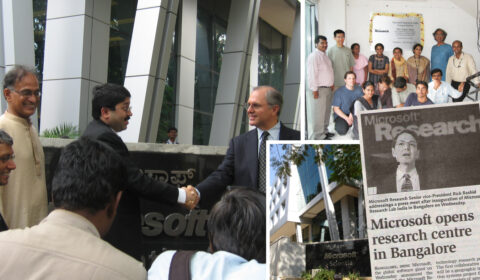
Over the past two decades, Microsoft Research India has achieved an extraordinary record of innovation—in areas ranging from health and education to agriculture and accessibility.

Ideas: Building AI for population-scale systems with Akshay Nambi
| Chris Stetkiewicz and Akshay Nambi
Advances in AI are driving meaningful real-world impact. Principal Researcher Akshay Nambi shares how his passion for tackling real-world challenges across various domains fuels his work in building reliable and robust AI systems.
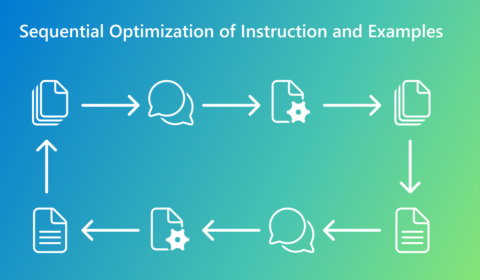
PromptWizard: The future of prompt optimization through feedback-driven self-evolving prompts
| Akshay Nambi and Tanuja Ganu
PromptWizard from Microsoft Research is now open source. It is designed to automate and simplify AI prompt optimization, combining iterative LLM feedback with efficient exploration and refinement techniques to create highly effective prompts in minutes.

Abstracts: NeurIPS 2024 with Pranjal Chitale
| Gretchen Huizinga and Pranjal Chitale
Pranjal Chitale discusses the 2024 NeurIPS work CVQA. Spanning 31 languages and the cultures of 30 countries, this VQA benchmark was created with native speakers and cultural experts to evaluate model performance across diverse linguistic and cultural contexts.