


Spencer Fowers
Principal Researcher
About
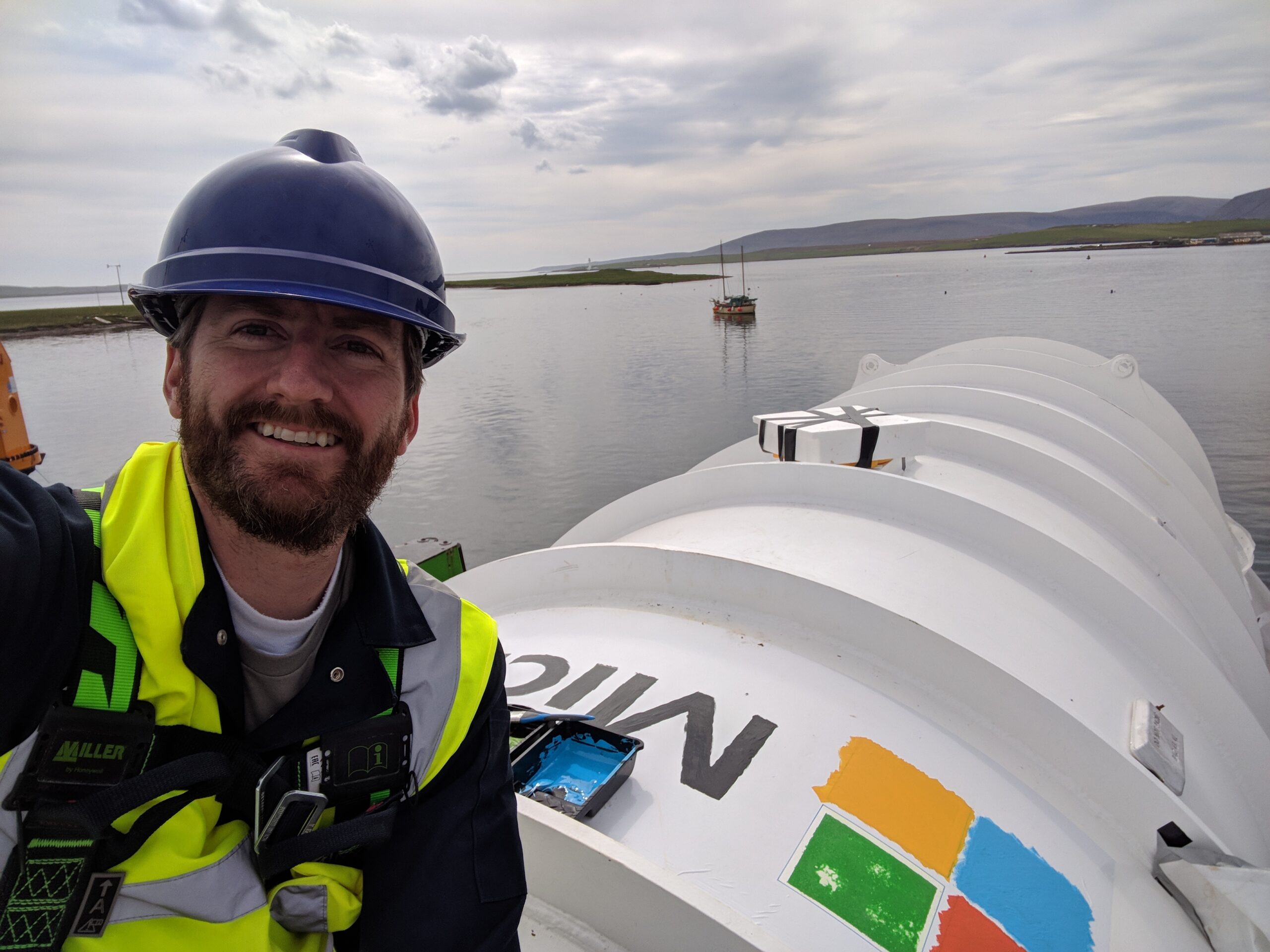
Spencer painted the Microsoft logo on the Natick Northern Isles datacenter
Spencer Fowers is a Principal Researcher in the Catalyst Lab at Microsoft Research Redmond. His work combines hands-on engineering with research leadership, taking ambitious ideas through prototypes, field experiments, and real-world deployment. He joined Microsoft in 2012 and Microsoft Research in 2014, working across AI, human-computer interaction, and complex physical systems.
Spencer’s current research focuses on multi-agent AI orchestration and graph-structured memory. He independently designed and built a multi-agent research and engineering system that combines large language models, specialized agents, tools, persistent knowledge, and structured evaluation. His work explores how to make long-running agent workflows reliable, resumable, and useful for research and software development.
Alongside colleagues, he investigates how agent loops remember what they have tried, select what to explore next, and determine when to stop. This research uses Microsoft Research graph-memory technology to organize exploration beyond a flat conversation log, with the goal of improving convergence, reducing repeated work, and lowering token costs.
Spencer’s recent completed work includes contributions to GridSFM, an open-source small foundation model for AC optimal power flow. He contributed to research and solver-based data-generation workflows using open grid-infrastructure data, and coauthored the model white paper and an open-data pipeline for constructing power-grid models.
Previously, Spencer led 3D Telemedicine, bringing Holoportation-based volumetric communication from studio environments into mobile clinical deployments connecting clinicians and patients in the United Kingdom and Ghana. He ran the project across engineering, clinical collaboration, local partnerships, and media engagement. The clinical research received the BAPRAS 2024 Top Paper award, and he spearheaded the platform’s open-source release (opens in new tab) in December 2025.
As technical lead for Project Natick, Spencer led research and development of the world’s first underwater datacenter, investigating the concept’s feasibility through field experiments. He managed the complete on-site deployment and recovery, coordinated international engineering partners, and developed sensor-fusion, telemetry, and reliability systems. He also served as a prominent spokesperson for the project in interviews and videos—and painted the Microsoft logo on the Northern Isles vessel himself.
Across these programs, Spencer has led small multidisciplinary teams, set research goals and milestones, and presented findings to senior leadership. His broader interests include small foundation models, power-grid optimization, human-computer interaction, robotics, computer vision, generative AI, embedded systems, and sensor integration. He holds a Ph.D. in Computer Engineering from Brigham Young University and is a named inventor on eight granted U.S. patents.