


Hardware & devices
Driving advances in hardware, devices and cyber-physical systems.


Project
Physical Computing
Physical computing refers to the use of tangible, embedded microcontroller-based interactive systems that can sense the world around them and/or control outputs such as lights, displays and motors. Assembling the hardware elements of a physical…
Event
Microsoft HoloLens 2 and Azure Kinect DK as tools for computer vision research – Tutorial @ ECCV 2020
Microsoft HoloLens 2 and Kinect for Azure as tools for computer vision research – Tutorial @ ECCV 2020

Microsoft Research Blog
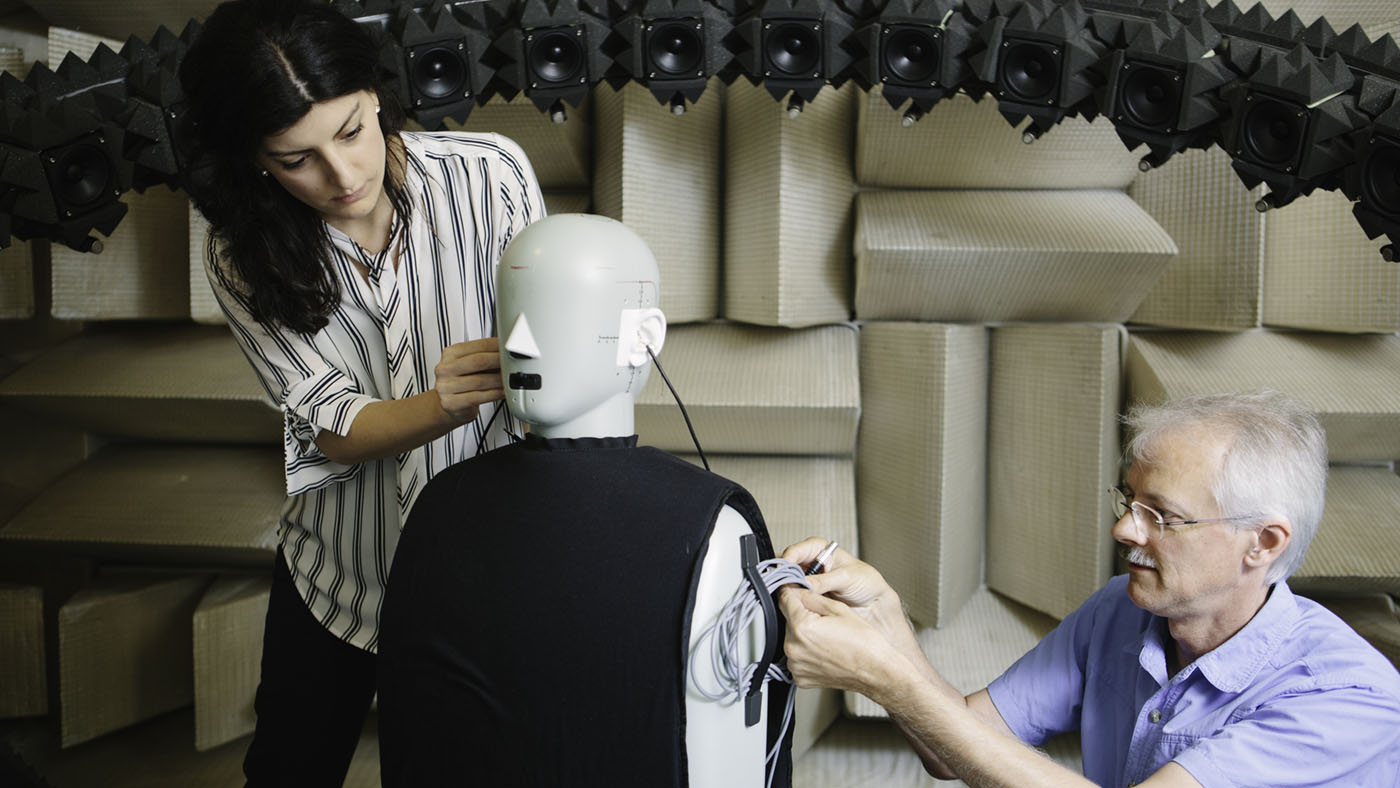
Research Collection: The Unseen History of Audio and Acoustics Research at Microsoft
Getting the sound right is a crucial ingredient in natural user interfaces, immersive gaming, realistic virtual and mixed reality, and ubiquitous computing.
Video
Sirius: A Flat Datacenter Network with Nanosecond Optical Switching. SIGCOMM 2020 full talk
The increasing gap between the growth of datacenter traffic and electrical switch capacity is expected to worsen due to the slowdown of Moore’s law, motivating the need for a new switching technology for the post-Moore’s…

Video
Harnessing high-fidelity simulation for autonomous systems through AirSim
Robots and autonomous systems are playing a significant role in modern times, in both academic research and industrial applications. Handling the constant variability and uncertainty present in the real world is a major challenge for…
