


Human-computer interaction
Redefining human experiences through innovations in research, design, and technology.



Video
HapSense: A Soft Haptic I/O Device with Uninterrupted Dual Functionalities of Force Sensing and Vibrotactile Actuation
We present HapSense, a single-volume soft haptic I/O device with uninterrupted dual functionalities of force sensing and vibrotactile actuation. To achieve both input and output functionalities, we employ a ferroelectric electroactive polymer as core functional…
Video
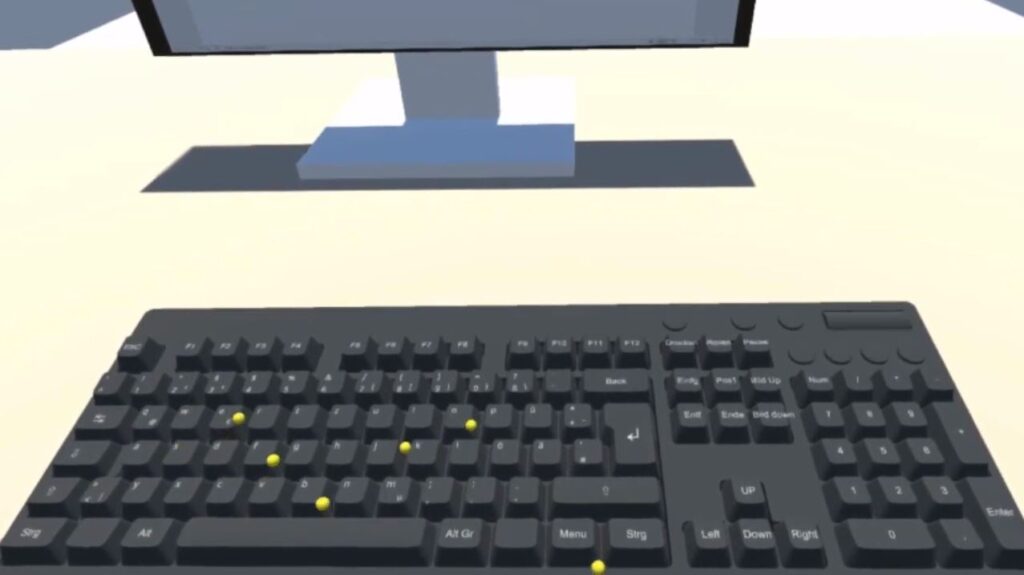
ReconViguRation: Reconfiguring Physical Keyboards in Virtual Reality. IEEE ISMAR 2019.
ISMAR 2019 Best Paper Daniel Schneider, Alexander Otte, Travis Gesslein, Philipp Gagel, Bastian Kuth, Mohamad Shahm Damlakhi, Oliver Dietz, Eyal Ofek, Michel Pahud, Per Ola Kristensson, Jörg Müller & Jens Grubert. ReconViguRation: Reconfiguring Physical Keyboards…
Project
Ada
Ada is the first first architectural pavilion project to incorporate artificial intelligence, Ada’s knitted light immerses visitors in a responsive and interactive glow of photoluminescence driven by individual and collective expression data gathered and housed…
Video
The making of Ada, Microsoft’s latest Artist in Residence installation
Ada, a two-story structure made of 3D printed nodes, fiberglass rods and fabric digitally knit with photoluminescent yarn, uses AI to translate anonymized data about facial expressions, noise, voice tones and language into a choreographed…

Podcast
Data science and ML for human well-being with Jina Suh
Using technology to help us improve our health is nothing new: a quick web search returns hundreds of apps and devices claiming to help us get fit, quit smoking, master anxiety or just “find our…

Publication
On the fly synthesis of edit suggestions
Video
SpaceInk: Making Space for In-Context Annotations
This video accompanies the UIST 2019 paper, “SpaceInk: Making Space for In-Context Annotations.” When editing or reviewing a document, people directly overlay ink marks on content. For instance, they underline words, or circle elements in…

Project
HoloTable
HoloTable explored view-dependent rendering to simulate a 3D experience for visualizing data as a “holographic” (“above-screen”) or “volumetric” (“below-screen”) display. Head-tracking using a Kinect sensor provided depth-cues via parallax. Anaglyph rendering could provide stereo images.…