
We live in a rapidly changing world.
Demographic shifts, climate change, political dynamics, and many other forces are creating urgent challenges in critical areas like global health and scientific discovery, environmental sustainability, food security, and societal resilience.
In this new AI era, technology is changing even faster than before, and the transition from research to reality, from concept to solution, now takes days or weeks rather than months or years.
“Today we are seeing so much AI research happening at the speed of conversation, to the point where even our top researchers feel that their heads are spinning, but working together, providing openness, providing greater access, we can see that we’ve made tremendous progress.”
– Peter Lee, President, Microsoft Research
In 2024, Microsoft Research continued its foundational research to expand the capabilities of large language models, but we also explored more deeply how smaller models (opens in new tab) can be trained for specific tasks. We discovered that by using smaller datasets and fewer compute resources, some small language models can demonstrate enhanced reasoning and other complex capabilities that were once considered the exclusive province of large-scale models.
Microsoft Research and its external collaborators used AI to enable earlier detection and treatment of esophageal cancer, which could lead to dramatically improved survival rates, and to accelerate the discovery of new drugs needed to treat infectious diseases that kill millions of people every year. And we continued to use AI to develop new tools for scientific discovery so that we and others in the scientific community can confront some of humanity’s most important challenges.
One team of Microsoft researchers created the world’s first large-scale model of the atmosphere, which could transform weather forecasting and our ability to predict and mitigate the effects of extreme weather events. Another team worked with global experts to create a generative AI tool that empowers non-governmental organizations (NGOs) to fight human trafficking.
We also opened a new research lab in Tokyo (opens in new tab) this year. It joins our other labs in Europe, Asia, Africa, and North America. And we launched a series of quarterly Research Forums (opens in new tab) to help update the global research community about some of the pivotal work we’re doing at Microsoft Research. Register for future episodes (opens in new tab), view presentations from previous forums, and explore our briefing book content.
This post highlights some of the work that Microsoft Research has done in 2024, along with academic and industry colleagues, to help drive real-world benefits for people worldwide.
AI for Business Transformation: Multimodal Models
Top social posts of 2024
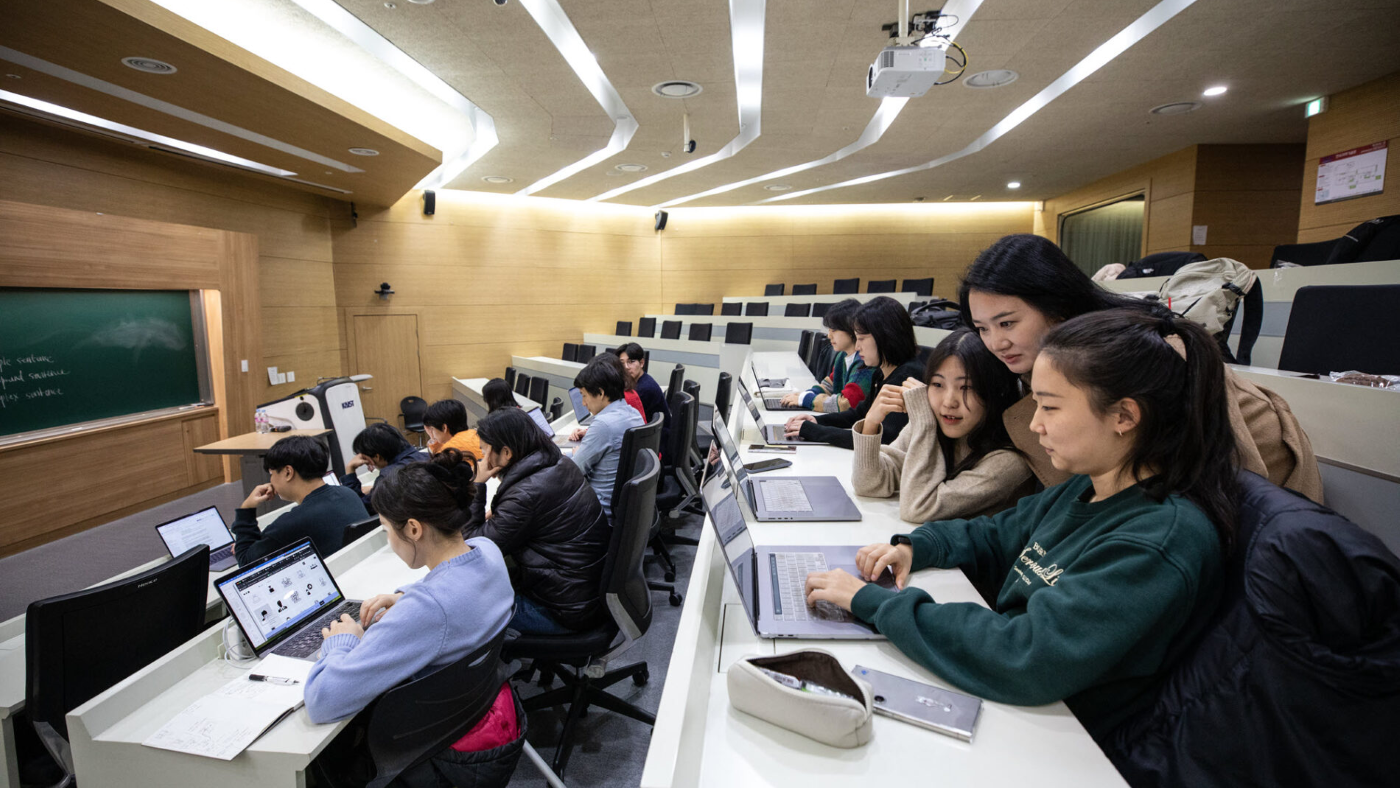
Accelerating Foundation Models Research
Microsoft Research program encourages AI development by academics, not just industry.
Ece Kamar on the future of AI agents

Introducing BitNet b1.58
1.58-bit LLMs that rival full-precision Transformer LLMs in performance while significantly boosting efficiency—in terms of latency, throughput, memory and energy consumption.
Phi-4
A small language model that performs as well as (and often better than) large models on certain types of complex reasoning tasks.
Q-Sparse
A breakthrough in training fully sparsely-activated LLMs supports both full-precision and 1-bit LLMs.
You Only Cache Once (YOCO)
A novel decoder-decoder architecture for LLMs, enhancing memory efficiency by caching key-value pairs only once.
Differential Transformer
A new foundation architecture for LLMs that enhances focus on relevant information while canceling attention noise.
AI Controller Interface
Helping researchers and developers efficiently implement existing strategies for controlling LLMs and invent new ones.
GraphRAG 1.0
Advancing AI use in complex domains like science.
MatterSimV1
A deep learning atomistic model across elements, temperatures, and pressures.
Top stories of 2024
GHDDI and Microsoft Research use AI to achieve progress in new drug discovery for global infectious diseases

The joint team designed several chemical compounds that are effective in inhibiting these pathogens’ essential target proteins, accelerating the structure-based drug discovery process.
 Blog
Recipients of the AFMR Minority Serving Institutions grant
Blog
Recipients of the AFMR Minority Serving Institutions grant Microsoft announced the 10 inaugural grant recipients through the Accelerate Foundation Models Research Minority Serving Institutions grant program.
 Event
Microsoft Research Forum | Episode 1
Event
Microsoft Research Forum | Episode 1 Leading researchers at Microsoft explored the latest breakthroughs in AI models, new applications of AI to important scientific challenges, novel approaches to model evaluation and understanding, and other key research topics.
 Podcast
Improving Reasoning in Language Models with Layer-Selective Rank Reduction (LASER)
Podcast
Improving Reasoning in Language Models with Layer-Selective Rank Reduction (LASER) The work shows that the removal of certain parameters not only maintains model performance like some existing parameter-reduction methods but can actually improve it—no additional training necessary.
GraphRAG: Unlocking LLM discovery on narrative private data

GraphRAG is a significant advance in enhancing the capability of LLMs and enables us to answer important classes of questions that we cannot attempt with baseline RAG alone.
 Blog
ViSNet: A general molecular geometry modeling framework for predicting molecular properties and simulating molecular dynamics
Blog
ViSNet: A general molecular geometry modeling framework for predicting molecular properties and simulating molecular dynamics ViSNet emerged as a versatile tool capable of giving insight into the intricate relationships between molecular structure and biological activity.
Podcast
The Metacognitive Demands and Opportunities of Generative AI Can how we think about our thinking help us better incorporate generative AI into our lives and work? Microsoft researchers explored metacognition’s potential to improve the tech’s usability.
This year, AI is expected to become more accessible, nuanced, and integrated in technologies that improve everyday tasks and help solve some of the world’s most challenging problems.
Scaling early detection of esophageal cancer with AI
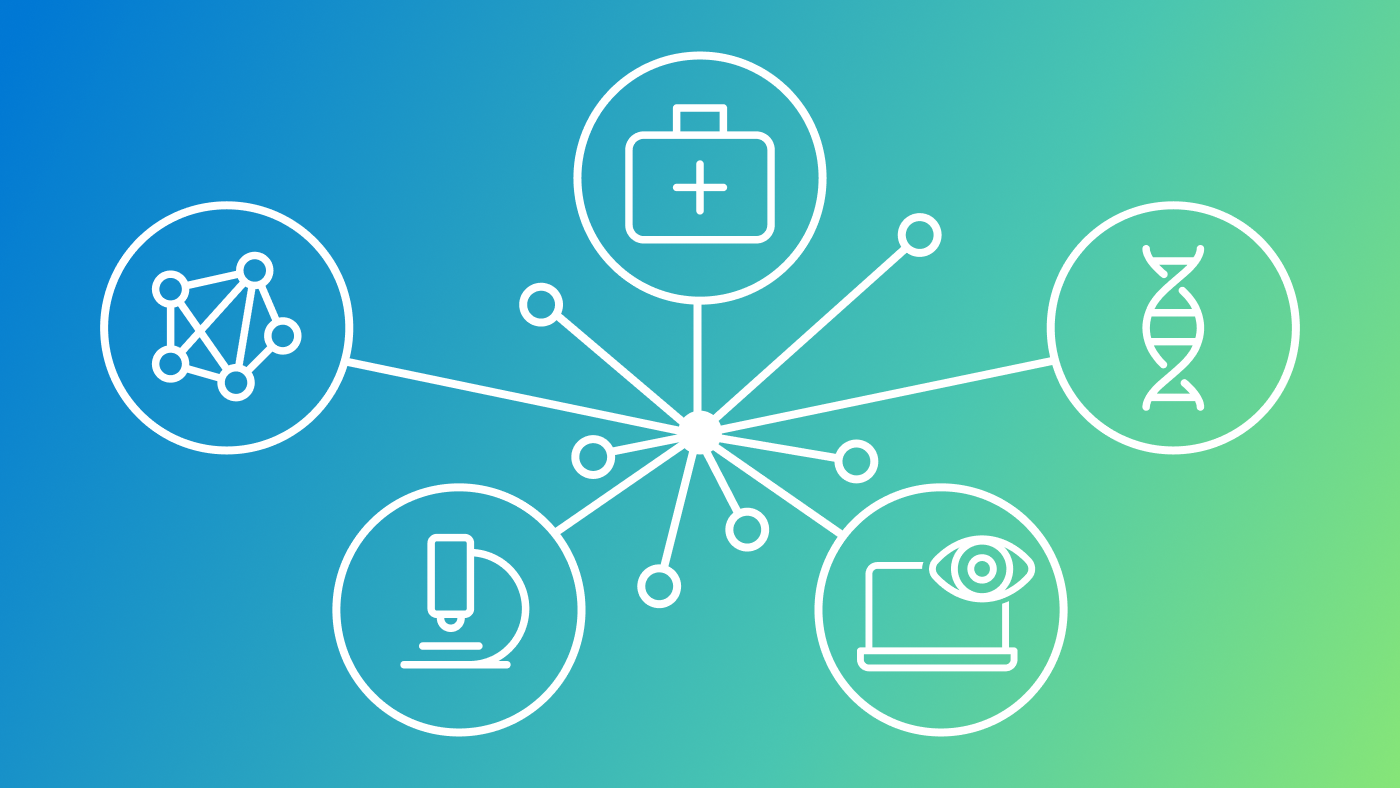
Our collaboration with Cyted demonstrates the transformative potential of integrating advanced AI models into clinical workflows. Earlier detection of cancer and earlier start of treatment mean that more than 9 in 10 patients survive 5 years after diagnosis.
 Blog
Orca-Math: Demonstrating the potential of SLMs with model specialization
Blog
Orca-Math: Demonstrating the potential of SLMs with model specialization By training Orca-Math on a small dataset of 200,000 math problems, we have achieved performance levels that rival or surpass those of much larger models.
 Blog
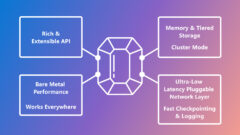
Introducing Garnet – an open-source, next-generation, faster cache-store for accelerating applications and services
Blog
Introducing Garnet – an open-source, next-generation, faster cache-store for accelerating applications and services We hope to enable the developer community to benefit from the cache-store system’s performance gains and capabilities, to build on our work, and to expand the Garnet ecosystem by adding new API calls and features.
 Event
Microsoft Research Forum | Episode 2
Event
Microsoft Research Forum | Episode 2 Leading researchers at Microsoft discussed how AI is transforming health care and the natural sciences, the intersection of AI and society, and the continuing evolution of foundational AI technologies.
Podcast
M-OFDFT: Overcoming the barrier of orbital-free density functional theory for molecular systems Senior Researcher Chang Liu discusses M-OFDFT, which leverages deep learning to help identify molecular properties in a way that minimizes the tradeoff between accuracy and efficiency, work with the potential to benefit drug and materials discovery.
 Podcast
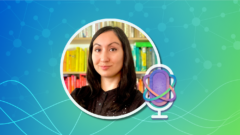
AI Frontiers: Rethinking intelligence with Ashley Llorens and Ida Momennejad
Podcast
AI Frontiers: Rethinking intelligence with Ashley Llorens and Ida Momennejad Principal Researcher Ida Momennejad brings her expertise in cognitive neuroscience and computer science to this in-depth conversation about general intelligence and what the evolution of the brain across species can teach us about building AI.
SIGMA: An open-source mixed-reality system for research on physical task assistance

Imagine if every time you needed to complete a complex physical task you had a world-class expert standing over your shoulder and guiding you through the process. What would it take to build an interactive AI system that could assist you with any task in the physical world?
 Blog
SAMMO: A general-purpose framework for prompt optimization
Blog
SAMMO: A general-purpose framework for prompt optimization SAMMO streamlined the optimization of prompts, particularly those that combine different types of structural information, to enable AI practitioners and researchers to efficiently refine prompts with little manual effort.
 Publication
Spectrumize: Spectrum-efficient Satellite Networks for the Internet of Things
Publication
Spectrumize: Spectrum-efficient Satellite Networks for the Internet of Things Researchers proposed a method for leveraging the motion of small satellites to facilitate efficient communication between a large IoT-satellite constellation and devices on Earth within a limited spectrum.
 Blog
Microsoft at NSDI 2024: Discoveries and implementations in networked systems
Blog
Microsoft at NSDI 2024: Discoveries and implementations in networked systems NSDI provides a platform for researchers and experts to share insights, present research findings, and collaborate on the latest advances in the design, implementation, and evaluation of networked and distributed systems.
 Blog
Microsoft at ASPLOS 2024: Advancing hardware and software for high-scale, secure, and efficient modern applications
Blog
Microsoft at ASPLOS 2024: Advancing hardware and software for high-scale, secure, and efficient modern applications ASPLOS is the main forum where researchers bridge the gap between architecture, programming languages, and operating systems to advance the state of the art.
 Podcast
Ideas: Language technologies for everyone with Kalika Bali
Podcast
Ideas: Language technologies for everyone with Kalika Bali The new series “Ideas” debuts with guest Kalika Bali. The speech and language tech researcher talks sci-fi and its impact on her career, the design thinking philosophy behind her research, and the “outrageous idea” she had to work with low-resource languages.
MatterSim: A deep-learning model for materials under real-world conditions

The model efficiently handles simulations for a variety of materials, including metals, oxides, sulfides, halides, and their various states such as crystals, amorphous solids, and liquids.
 Blog
RASCAL: Novel robotics for scalable and highly available automated storage and retrieval
Blog
RASCAL: Novel robotics for scalable and highly available automated storage and retrieval Breakthroughs in robotics technology are poised to drive productivity, efficiency, and innovation across numerous industries. RASCAL improves the efficiency of vertical storage systems by operating across evenly spaced, parallel shelves and horizontal rails.
 Blog
GigaPath: Whole-Slide Foundation Model for Digital Pathology
Blog
GigaPath: Whole-Slide Foundation Model for Digital Pathology The confluence of digital transformation in biomedicine and the current generative AI revolution creates an unprecedented opportunity for drastically accelerating progress in precision health. Prov-GigaPath attains state-of-the-art performance on standard cancer classification and pathomics tasks, as well as vision-language tasks.
 Blog
LoftQ: Reimagining LLM fine-tuning with smarter initialization
Blog
LoftQ: Reimagining LLM fine-tuning with smarter initialization LoftQ adapts pre-trained language models to perform well in specialized applications. During fine-tuning, the model undergoes additional training on a smaller, task-specific dataset for improved performance.
 Blog
FastGen: LLM profiling guides KV cache optimization
Blog
FastGen: LLM profiling guides KV cache optimization FastGen optimizes the way LLMs store and access data, potentially cutting memory use by half while preserving their efficiency.
Aurora: The first large-scale foundation model of the atmosphere

Aurora presents a new approach to weather forecasting that could transform our ability to predict and mitigate the impacts of extreme events. The model can forecast a broad range of atmospheric variables, from temperature and wind speed to air-pollution levels and concentrations of greenhouse gases.
 Blog
Introducing AutoGen Studio: A low-code interface for building multi-agent workflows
Blog
Introducing AutoGen Studio: A low-code interface for building multi-agent workflows AutoGen Studio is the next step forward in enabling developers to advance the multi-agent paradigm.
 Event
Microsoft Research Forum | Episode 3
Event
Microsoft Research Forum | Episode 3 Leading researchers at Microsoft dove into the importance of globally inclusive and equitable AI, shared updates on AutoGen and MatterGen, explored novel use cases for AI, and more.
 Blog
Microsoft at FAccT 2024: Advancing responsible AI research and practice
Blog
Microsoft at FAccT 2024: Advancing responsible AI research and practice The conference brings together experts from a wide range of disciplines who are committed to the responsible development of computational systems.
 Blog
Microsoft at CVPR 2024: Innovations in computer vision and AI research
Blog
Microsoft at CVPR 2024: Innovations in computer vision and AI research This conference covered a broad spectrum of topics, including 3D reconstruction and modeling, action and motion analysis, video and image processing, synthetic data generation, neural networks, and more.
Data-driven model improves accuracy in predicting EV battery degradation

Microsoft Research collaborated with Nissan Motor Corporation to develop a new machine learning method that predicts battery degradation with an average error rate of just 0.94%, significantly bolstering Nissan’s battery recycling efforts.
 Blog
Empowering NGOs with generative AI in the fight against human trafficking
Blog
Empowering NGOs with generative AI in the fight against human trafficking Intelligence Toolkit is a human rights technology developed with global experts in the anti-trafficking community, yet applicable to a broad class of problems impacting societal resilience as a whole.
 Blog
Tracing the path to self-adapting AI agents
Blog
Tracing the path to self-adapting AI agents Trace is a new AutoDiff-like tool for training AI systems without using gradients. This generalization is made possible by OPTO, which can describe end-to-end optimization of AI systems with general feedback.
 Podcast
AgentInstruct: Toward Generative Teaching with Agentic Flows
Podcast
AgentInstruct: Toward Generative Teaching with Agentic Flows Researchers introduced an automated multi-agent framework for creating diverse, high-quality synthetic data at scale for language model post-training.
 Blog
Microsoft at ICML 2024: Innovations in machine learning
Blog
Microsoft at ICML 2024: Innovations in machine learning In an era increasingly steered by data, machine learning is a pivotal force, transforming vast amounts of information into actionable intelligence with unprecedented speed and accuracy.
Large-scale pathology foundation models show promise on a variety of cancer-related tasks

Imagine if pathologists had tools that could help predict therapeutic responses just by analyzing images of cancer tissue. By leveraging AI and machine learning, researchers are now able to analyze digitized tissue samples with unprecedented accuracy and scale, potentially transforming how we understand and treat cancer.
 Blog
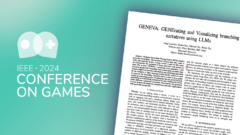
GENEVA uses large language models for interactive game narrative design
Blog
GENEVA uses large language models for interactive game narrative design With the skilled input of experienced game designers, tools like GENEVA could increasingly contribute to creating engaging gameplay experiences.
 Podcast
Personhood credentials: Privacy-preserving tools to distinguish who is real online
Podcast
Personhood credentials: Privacy-preserving tools to distinguish who is real online A multidisciplinary research team is exploring one solution: a credential that allows people to show they’re not bots without sharing identifying information.
AI has not yet delivered its full economic potential. Researchers at Microsoft are working to address the challenges that hold back progress.
Find My Things: New teachable AI tool helps blind and low-vision people locate lost personal items

Find My Things makes it easy for people with vision disabilities to use their phones to recognize and locate the personal items they use every day.
 Blog
MedFuzz: Exploring the robustness of LLMs on medical challenge problems
Blog
MedFuzz: Exploring the robustness of LLMs on medical challenge problems MedFuzz is an adversarial machine learning method designed to reveal how much benchmark performance relies on unrealistic assumptions.
 Blog
Eureka: Evaluating and understanding progress in AI
Blog
Eureka: Evaluating and understanding progress in AI Eureka is an open-source framework for standardizing evaluations of large foundation models beyond single-score reporting and rankings.
 Podcast
Collaborators: Silica in space with Richard Black and Dexter Greene
Podcast
Collaborators: Silica in space with Richard Black and Dexter Greene College freshman Dexter Greene and Microsoft research manager Richard Black discuss how technology that stores data in glass is supporting students as they expand earlier efforts to communicate what it means to be human to extraterrestrials.
 Event
Microsoft Research Forum | Episode 4
Event
Microsoft Research Forum | Episode 4 Leading researchers at Microsoft shared the latest multimodal AI models, advanced benchmarks for AI evaluation and model self-improvement, and an entirely new kind of computer for AI inference and hard optimization.
Data Formulator: Exploring how AI can help analysts create rich data visualizations

Data Formulator’s architecture separates data transformation from chart configuration, improving both the user experience and AI performance. Refining how users interact with AI-powered tools is essential for improving how they communicate their requirements, paving the way for more efficient and effective collaboration.
 Blog
Introducing DRIFT Search: Combining global and local search methods to improve quality and efficiency
Blog
Introducing DRIFT Search: Combining global and local search methods to improve quality and efficiency DRIFT Search introduces a new approach to local search queries by including community information in the search process.
The combination of Novo Nordisk’s industry-leading domain expertise and Microsoft’s industry-leading applied AI expertise is opening new and exciting possibilities to shape the future of life sciences.
Microsoft researchers are working to apply foundation models—large-scale models that take advantage of recent AI advances—to scientific disciplines.
Peter Lee discusses what’s next for AI in this GeekWire podcast. Peter’s comments begin at 29:20.
Since the early 1990s, the promise of AI has been a driving force at Microsoft Research, which has a track record of breakthroughs that continue to advance the state of the art.
Microsoft establishes a new lab, Microsoft Research Asia – Tokyo (opens in new tab)

The Tokyo lab will focus on critical areas that reflect Japan’s socioeconomic priorities, including embodied AI, well-being and neuroscience, societal AI, and industry innovation. These research efforts aim to leverage advanced technologies to foster societal progress and contribute to the region’s innovation ecosystem.
 Blog
From static prediction to dynamic characterization: AI2BMD advances protein dynamics with ab initio accuracy
Blog
From static prediction to dynamic characterization: AI2BMD advances protein dynamics with ab initio accuracy Microsoft Research has been working on the development of efficient methods aiming for ab initio accuracy simulations of biomolecules. This method, AI2BMD (AI-based ab initio biomolecular dynamics system), published in the journal Nature, represents the culmination of a four-year research endeavor.
 Blog
BiomedParse: A foundation model for smarter, all-in-one biomedical image analysis
Blog
BiomedParse: A foundation model for smarter, all-in-one biomedical image analysis By unifying object recognition, detection, and segmentation into a single framework, BiomedParse allows users to specify what they’re looking for through a simple, natural-language prompt.
 Podcast
Verus: A Practical Foundation for Systems Verification
Podcast
Verus: A Practical Foundation for Systems Verification Researchers Chris Hawblitzel and Jay Lorch share how progress in programming languages and verification approaches are bringing bug-free software within reach. Their work on the Rust verification tool Verus won the Distinguished Artifact Award at SOSP ’24.
 Blog
Accelerating drug discovery with TamGen: A generative AI approach to target-aware molecule generation
Blog
Accelerating drug discovery with TamGen: A generative AI approach to target-aware molecule generation TamGen offers a new approach to drug discovery by applying the principles of generative AI to molecular design.
 Blog
Microsoft at SOSP 2024: Innovations in systems research
Blog
Microsoft at SOSP 2024: Innovations in systems research In an age where digital infrastructure underpins nearly every facet of modern life, SOSP serves as an important forum for showcasing the technologies that shape our interconnected world.
 Podcast
Ideas: The journey to DNA data storage
Podcast
Ideas: The journey to DNA data storage Research manager Karin Strauss and members of the DNA Data Storage Project reflect on the path to developing a synthetic DNA–based system for archival data storage, including the recent open-source release of its most powerful algorithm for DNA error correction.
MarS: A unified financial market simulation engine in the era of generative foundation models

These innovations have the potential to empower financial researchers to customize generative models for diverse scenarios, establishing a new paradigm for applying generative models to downstream tasks in financial markets.
Learn about Phi-4, the latest small language model in Phi family, that offers high-quality results at a small size (14B parameters).
 Story
Microsoft at NeurIPS 2024: Advancing AI research across domains
Story
Microsoft at NeurIPS 2024: Advancing AI research across domains More than 100 papers by Microsoft researchers and collaborators have been accepted at NeurIPS 2024, including five oral presentations and 19 spotlight sessions.
 Blog
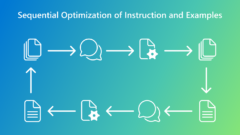
PromptWizard: The future of prompt optimization through feedback-driven self-evolving prompts
Blog
PromptWizard: The future of prompt optimization through feedback-driven self-evolving prompts PromptWizard from Microsoft Research is now open source. It is designed to automate and simplify AI prompt optimization, combining iterative LLM feedback with efficient exploration and refinement techniques to create highly effective prompts in minutes.
 Podcast
Ideas: AI and democracy with Madeleine Daepp and Robert Osazuwa Ness
Podcast
Ideas: AI and democracy with Madeleine Daepp and Robert Osazuwa Ness As the “biggest election year in history” comes to an end, researchers Madeleine Daepp and Robert Osazuwa Ness and Democracy Forward GM Ginny Badanes discuss AI’s impact on democracy, including Daepp and Ness’s research into the tech’s use in Taiwan and India.
According to Ashley Llorens, corporate vice president and managing director at Microsoft Research, AI models will soon be able to handle far more complex tasks.
Thank you for reading, watching, and listening
In 2024, contributions across the research community at Microsoft continued to advance the company’s vision of what technology can and should be: a means for empowering every person and every organization on the planet to achieve more.
To stay informed of the latest innovations, subscribe to the Microsoft Research Newsletter (opens in new tab) and the Microsoft Research Podcast. You can also follow us on Bluesky (opens in new tab), Facebook (opens in new tab), Instagram (opens in new tab), LinkedIn (opens in new tab), X (opens in new tab), and YouTube (opens in new tab).
Writers, Editors, and Producers: Kristina Dodge, Kate Forster, Jessica Gartner, Alyssa Hughes, Gretchen Huizinga, Lindsay Kalter, Brenda Potts, Chris Stetkiewicz, Larry West
Media Producers: Jeremy Crawford, Chris Duryee, Ben Ericson, Jeremy Mashburn, Matthew McGinley, Wil Morrill, Sandro Nigris, Joe Plummer, Craig Tuschhoff
Managing Editor, Research Publishing: Amber Tingle
Project Manager: Amanda Melfi
Microsoft Research Global Design Lead: Neeltje Berger
Graphic Designers: David Celis Garcia, Tetiana Buhinskaya
Director, Microsoft Research Creative Studio: Matt Corwine
Originally published on December 20, 2024