
Grand Challenges of Human-Robot Interaction in Space
- Scott Davidoff and Mark Powell | NASA
From the capture and return of an asteroid, to the orbital assembly of space vehicles, robots play a significant role in nearly every scenario of future space exploration. Given the costs and risks involved in space exploration, space agencies look to solve these problems by creating systems where humans and robots can effectively collaborate. In this talk, I describe efforts to develop control systems for two NASA robots.
ATHLETE is a hexapod robot designed to support multiple mission scenarios, including asteroid exploration and capture, and mining, lunar and Martian roving. Robonaut 2 is an anthropomorphic robot designed with the manual dexterity to conduct astronaut work. An R2 is currently deployed at the ISS.
From across the variety of systems developed, I identify a common set recurring, wicked problems. I describe these as the grand challenges of the robotic exploration of space, and consider the ways research in Human-Robot interaction could contribute to their solution.
Speaker Details
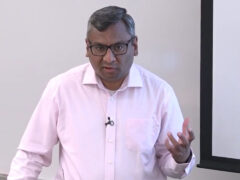
Dr. Scott Davidoff manages the Human Interfaces group at the NASA Jet Propulsion Laboratory. His group develops the systems that scientists around the world use to plan the activities of every NASA space robot, from yesterday’s Voyager, to today’s Curiosity, and tomorrow’s future missions into deep space. His work draws upon the techniques of big data visualization, interaction, and Augmented Reality to develop detailed representations of spatio-temporal robotic plans. Dr. Davidoff also brings his experience teaching design at Carnegie Mellon to develop new ways to use low fidelity prototyping for space robots.
Previously, Dr. Davidoff developed domestic robots for Microsoft Research, and as Principal of Scott Davidoff Design, brought new concepts to life for companies like AOL, SBC Ameritech and TV Guide. Dr. Davidoff has a Ph.D. in Human-Computer Interaction, an MS in HCI (Research), and an M.HCI in Human-Computer Interaction (Practice), all from Carnegie Mellon.
-
-

Jeff Running
-
Series: Microsoft Research Talks
-

Decoding the Human Brain – A Neurosurgeon’s Experience
- Dr. Pascal O. Zinn
-
-
-
-
-
-

Challenges in Evolving a Successful Database Product (SQL Server) to a Cloud Service (SQL Azure)
- Hanuma Kodavalla,
- Phil Bernstein
-

Improving text prediction accuracy using neurophysiology
- Sophia Mehdizadeh
-

Tongue-Gesture Recognition in Head-Mounted Displays
- Tan Gemicioglu
-

DIABLo: a Deep Individual-Agnostic Binaural Localizer
- Shoken Kaneko
-
-
-
-

Audio-based Toxic Language Detection
- Midia Yousefi
-
-
From SqueezeNet to SqueezeBERT: Developing Efficient Deep Neural Networks
- Forrest Iandola,
- Sujeeth Bharadwaj
-

Hope Speech and Help Speech: Surfacing Positivity Amidst Hate
- Ashique Khudabukhsh
-
-
-

Towards Mainstream Brain-Computer Interfaces (BCIs)
- Brendan Allison
-
-
-
-
Learning Structured Models for Safe Robot Control
- Subramanian Ramamoorthy
-


