
How I Learned to Stop Worrying and Love the Exascale
- George Amvrosiadis | Carnegie Mellon University
Our ability to produce data continues to grow exponentially, and so does the computational power available in the world. By 2021, it is expected that zettabytes will be stored in the cloud, and the DoE will have deployed heterogeneous exascale clusters with millions of CPU cores and tens of thousands of nodes. Resources at this scale have the potential to accelerate scientific breakthroughs, but for that to happen we need to build scalable software systems that will utilize them efficiently.
Today, these clusters confine applications to operate in a non-privileged environment without feedback. I will be discussing our two-pronged effort to improve operational efficiency in this setting by: (a) allowing applications to control mechanisms and observe information traditionally accessible only to the operating system, and (b) using machine learning models to inform users of expected job behavior. This work is a collaboration with the Los Alamos and Argonne National Labs.
Speaker Details
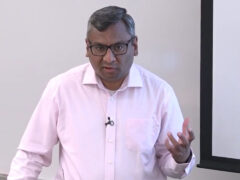
George is an Assistant Research Professor at Carnegie Mellon University with a primary appointment in Electrical and Computer Engineering and a courtesy appointment in the Computer Science Department. He is also a member of PDL, the CMU Parallel Data Lab. His research focuses on distributed systems, high performance computing, and data analysis. He co-teaches courses on cloud computing and storage systems. He received his Ph.D. from the University of Toronto.
-
-

Karin Strauss
Innovation Strategist, Senior Principal Research Manager
-
-

Series: Microsoft Research Talks
-

Decoding the Human Brain – A Neurosurgeon’s Experience
- Dr. Pascal O. Zinn
-
-
-
-
-
-

Challenges in Evolving a Successful Database Product (SQL Server) to a Cloud Service (SQL Azure)
- Hanuma Kodavalla,
- Phil Bernstein
-

Improving text prediction accuracy using neurophysiology
- Sophia Mehdizadeh
-

Tongue-Gesture Recognition in Head-Mounted Displays
- Tan Gemicioglu
-

DIABLo: a Deep Individual-Agnostic Binaural Localizer
- Shoken Kaneko
-
-
-
-

Audio-based Toxic Language Detection
- Midia Yousefi
-
-
From SqueezeNet to SqueezeBERT: Developing Efficient Deep Neural Networks
- Forrest Iandola,
- Sujeeth Bharadwaj
-

Hope Speech and Help Speech: Surfacing Positivity Amidst Hate
- Ashique Khudabukhsh
-
-
-

Towards Mainstream Brain-Computer Interfaces (BCIs)
- Brendan Allison
-
-
-
-
Learning Structured Models for Safe Robot Control
- Subramanian Ramamoorthy
-


