
Quantum-Circuit Design for Efficiently Simulating Many-Body Quantum Dynamics
- Nathan Wiebe | Institute for Quantum Computing
We construct an efficient autonomous quantum-circuit design algorithm for creating efficient quantum circuits to simulate Hamiltonian many-body quantum dynamics for arbitrary input states.
The resultant quantum circuits have a size that scales optimally with respect to space complexity and employ a sequence of gates that is close to optimal with respect to time complexity. We also present an algorithm that exploits commutativity to optimize the circuits for parallel execution. As examples, we show how to use our autonomous algorithm to construct circuits for simulating dynamics of Kitaev’s honeycomb model and the Bardeen-Cooper-Schrieffer model of superconductivity.
Speaker Details
Nathan Wiebe completed his bachelor’s and master’s degrees in physics at Simon Fraser University, before moving to Calgary, to pursue a PhD at the Institute for Quantum Information Science. He completed his PhD in 2011 and is currently a post-doctoral fellow at the Institute for Quantum Computing. His current areas of scientific research involve quantum simulation, adiabatic quantum computing and machine learning.
-
-

Jeff Running
-

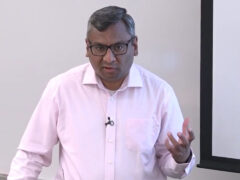
Nathan Wiebe
Researcher
-
Series: Microsoft Research Talks
-

Decoding the Human Brain – A Neurosurgeon’s Experience
- Dr. Pascal O. Zinn
-
-
-
-
-
-

Challenges in Evolving a Successful Database Product (SQL Server) to a Cloud Service (SQL Azure)
- Hanuma Kodavalla,
- Phil Bernstein
-

Improving text prediction accuracy using neurophysiology
- Sophia Mehdizadeh
-

Tongue-Gesture Recognition in Head-Mounted Displays
- Tan Gemicioglu
-

DIABLo: a Deep Individual-Agnostic Binaural Localizer
- Shoken Kaneko
-
-
-
-

Audio-based Toxic Language Detection
- Midia Yousefi
-
-
From SqueezeNet to SqueezeBERT: Developing Efficient Deep Neural Networks
- Forrest Iandola,
- Sujeeth Bharadwaj
-

Hope Speech and Help Speech: Surfacing Positivity Amidst Hate
- Ashique Khudabukhsh
-
-
-

Towards Mainstream Brain-Computer Interfaces (BCIs)
- Brendan Allison
-
-
-
-
Learning Structured Models for Safe Robot Control
- Subramanian Ramamoorthy
-


