
The Median Hypothesis
- Ran Gilad-Bachrach | Microsoft Research
ABSTRACT:
A typical learning process begins with some prior beliefs about the target concept. These beliefs are refined using evidence, typically a sample. The evidence is used to compute a “posterior belief”, which assigns a probability distribution over the hypotheses class. The Bayes optimal hypothesis is the average hypothesis, weighted by the posterior. However, this hypothesis is often prohibitively costly to compute. Therefore, there is a need for an algorithm to construct a hypothesis (either a single hypothesis or some combination), given the posterior belief. Several methods have been proposed for this problem: for example, Gibbs sampling, ensemble methods, and choosing the maximum posterior. We propose a new method: choosing the median hypothesis. This method is close to the average Gibbs classifier and Bayes optimal classifier in terms of accuracy while having the same run-time efficiency, during the generalization phase, as the maximum posterior method.
In this talk, we will define a measure of depth for hypotheses, from which we derive the median hypothesis. We present generalization bounds which leverage the PAC-Bayes analysis technique. We present an algorithm to approximate the median hypotheses and we prove its correctness. Our definition of median is closely related to Tukey’s median; in fact our algorithm provides a polynomial approximation to the problem of finding the Tukey median.
This is a joint work with Chris J. C. Burges
Speaker Details
Ran Gilad-Bachrach earned his Ph.D. from the Hebrew university in Jerusalem. Following that he joint Intel Research to lead a small group of researchers to study applications of machine learning for improving distributed computing. Later he joined Bing to work on whole page relevance. His latest position is in Microsoft research as a member of the machine learning group. His work focuses on machine learning, both theory and applications in the medical domain.
-
-

Jeff Running
-
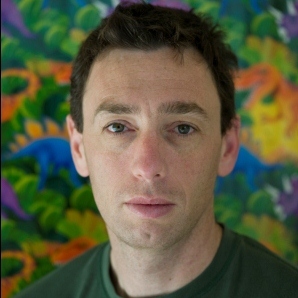
Ran Gilad-Bachrach
Researcher
-
Series: Microsoft Research Talks
-

Decoding the Human Brain – A Neurosurgeon’s Experience
- Dr. Pascal O. Zinn
-
-
-
-
-
-

Challenges in Evolving a Successful Database Product (SQL Server) to a Cloud Service (SQL Azure)
- Hanuma Kodavalla,
- Phil Bernstein
-

Improving text prediction accuracy using neurophysiology
- Sophia Mehdizadeh
-

Tongue-Gesture Recognition in Head-Mounted Displays
- Tan Gemicioglu
-

DIABLo: a Deep Individual-Agnostic Binaural Localizer
- Shoken Kaneko
-
-
-
-

Audio-based Toxic Language Detection
- Midia Yousefi
-
-
From SqueezeNet to SqueezeBERT: Developing Efficient Deep Neural Networks
- Forrest Iandola,
- Sujeeth Bharadwaj
-

Hope Speech and Help Speech: Surfacing Positivity Amidst Hate
- Ashique Khudabukhsh
-
-
-

Towards Mainstream Brain-Computer Interfaces (BCIs)
- Brendan Allison
-
-
-
-
Learning Structured Models for Safe Robot Control
- Subramanian Ramamoorthy
-


