
Progress in Error-Correction: A Survey
- Venkatesan Guruswami | CMU
Error-correcting codes play a crucial role in safeguarding data against the adverse effects of noise during communication and storage. They are also powerful tools that in the arsenal of theoretical computer science and combinatorics. The central challenge in coding theory is to construct codes with minimum possible redundancy for different error models and requirements on the decoder, along with efficient algorithms for error-correction using those codes. Much progress has been made toward this quest in the nearly seven decades since the birth of coding theory. Several fundamental problems, however, are still outstanding, and exciting new directions continue to emerge to address current technological demands as well as connections to computational complexity and cryptography.
This talk will survey some of our recent works on error-correction in various models, such as:
- worst-case errors, where we construct list decodable codes with redundancy as small as the target error fraction;
- i.i.d. errors, where we show polar codes enable efficient error-correction even as the redundancy approaches Shannon capacity;
- bit deletions, where we give codes that can correct the largest known fraction of deletions;
- single symbol erasure, a model of renewed importance for tackling node failures in distributed storage, where we give novel repair algorithms for Reed-Solomon codes as well as simple new codes with low-bandwidth repair mechanisms.
-
-
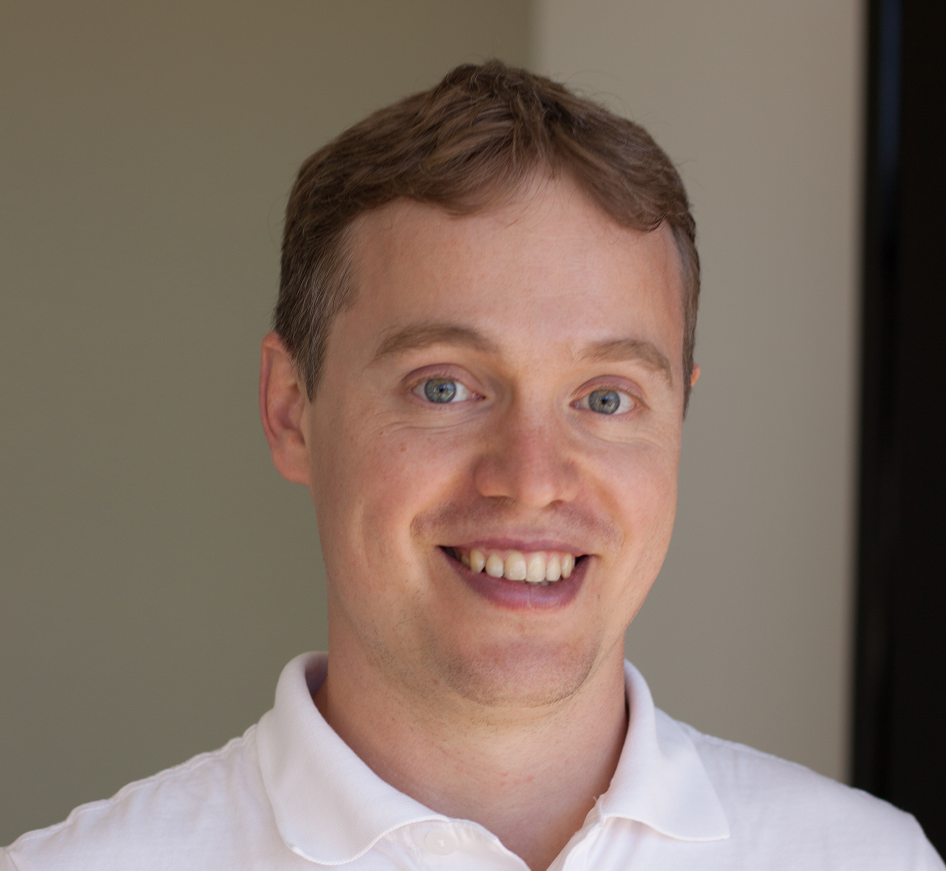
Sergey Yekhanin
Partner Research Manager
-
-
Series: Microsoft Research Talks
-

Decoding the Human Brain – A Neurosurgeon’s Experience
- Dr. Pascal O. Zinn
-
-
-
-
-
-

Challenges in Evolving a Successful Database Product (SQL Server) to a Cloud Service (SQL Azure)
- Hanuma Kodavalla,
- Phil Bernstein
-

Improving text prediction accuracy using neurophysiology
- Sophia Mehdizadeh
-

Tongue-Gesture Recognition in Head-Mounted Displays
- Tan Gemicioglu
-

DIABLo: a Deep Individual-Agnostic Binaural Localizer
- Shoken Kaneko
-
-
-
-

Audio-based Toxic Language Detection
- Midia Yousefi
-
-
From SqueezeNet to SqueezeBERT: Developing Efficient Deep Neural Networks
- Forrest Iandola,
- Sujeeth Bharadwaj
-

Hope Speech and Help Speech: Surfacing Positivity Amidst Hate
- Ashique Khudabukhsh
-
-
-

Towards Mainstream Brain-Computer Interfaces (BCIs)
- Brendan Allison
-
-
-
-
Learning Structured Models for Safe Robot Control
- Subramanian Ramamoorthy
-


