Microsoft Research Blog

Phi-4-reasoning-vision and the lessons of training a multimodal reasoning model 

March 4, 2026
We are pleased to announce Phi-4-reasoning-vision-15B, a 15 billion parameter open‑weight multimodal reasoning model, available through Microsoft Foundry (opens in new tab), HuggingFace (opens in new tab) and GitHub (opens in new tab). Phi-4-reasoning-vision-15B is a broadly capable model that can be used for a…

Recent Posts

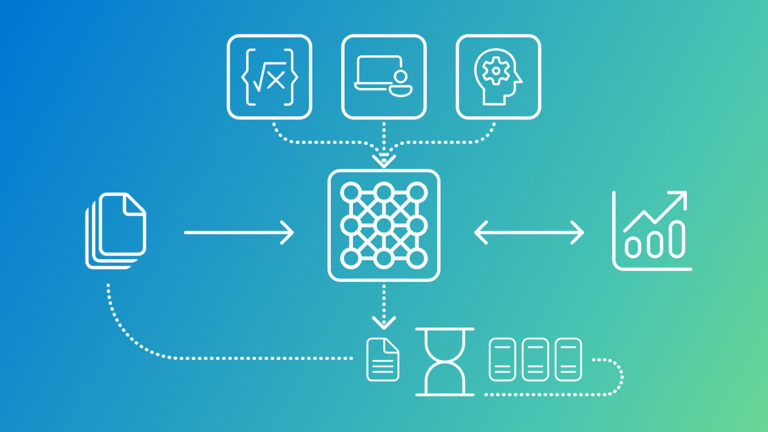
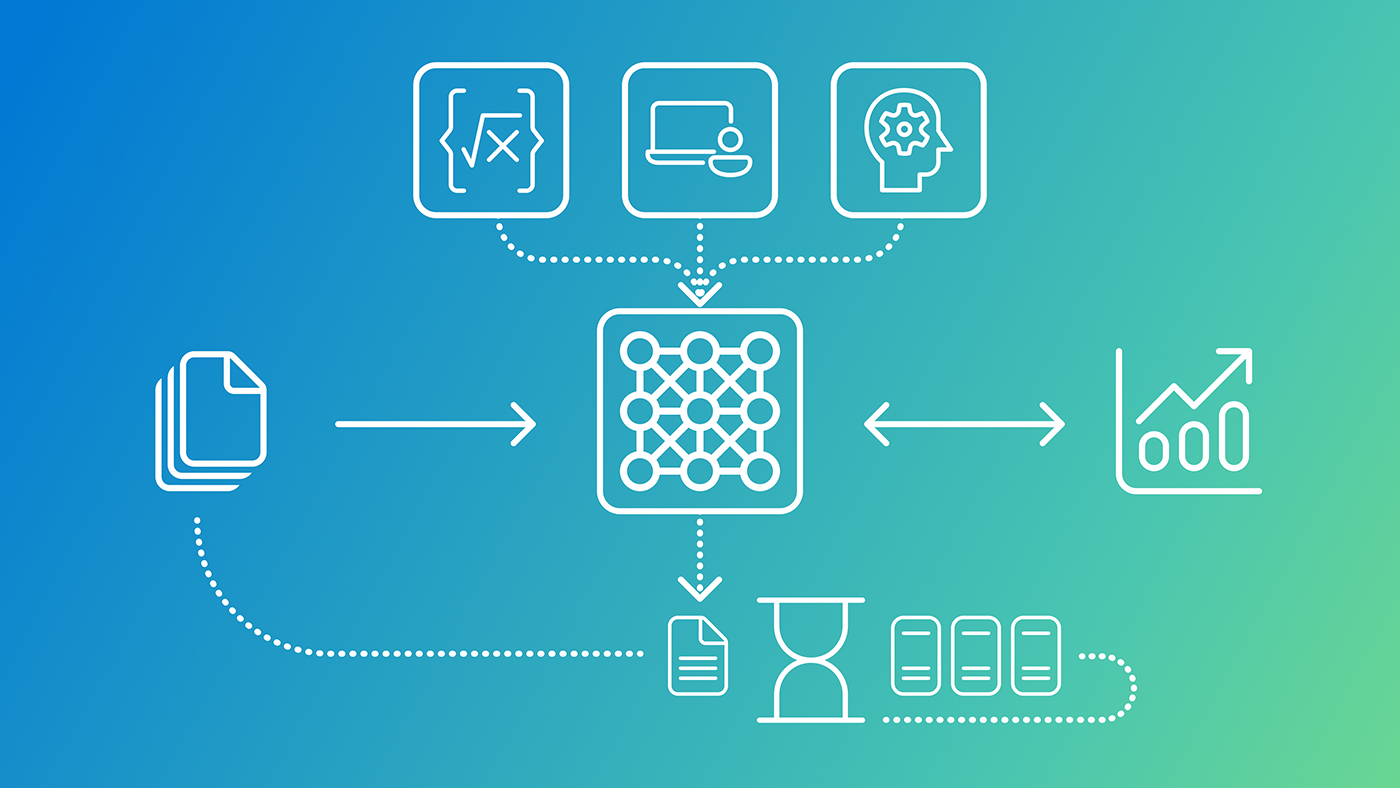
  1. White line icons against a blue-green gradient background form an architecture flow chart. In the middle of the chart is a three-by-three matrix of circles and lines within a round-edge square. Above the matrix, three icons in a row – an equation, a person using a desktop, and a head with gears flow by dotted lines to the matrix. To the left of the matrix is an icon representing a stack of files with an arrow pointing to the matrix. To the right of the matrix is a graph with a double headed arrow pointing to the matrix and to itself. Below the matrix is an icon representing a document. A dotted line arrow connects this graph to the matrix, showing the direction flowing from the matrix to the document. To the right of the document icon is an hourglass icon and three list icons with a dotted line connecting the hourglass to the lists.

    Phi-4-reasoning-vision and the lessons of training a multimodal reasoning model 

    March 4, 2026

    We are pleased to announce Phi-4-reasoning-vision-15B, a 15 billion parameter open‑weight multimodal reasoning model, available through Microsoft Foundry (opens in new tab), HuggingFace (opens in new tab) and GitHub (opens in new tab). Phi-4-reasoning-vision-15B is a broadly capable model that can be used for a…
  2. decorative icons in white on a blue and green gradient background

    CORPGEN advances AI agents for real work 

    February 26, 2026

    By mid-morning, a typical knowledge worker is already juggling a client report, a budget spreadsheet, a slide deck, and an email backlog, all interdependent and all demanding attention at once. For AI agents to be genuinely useful in that environment, they will need to operate…

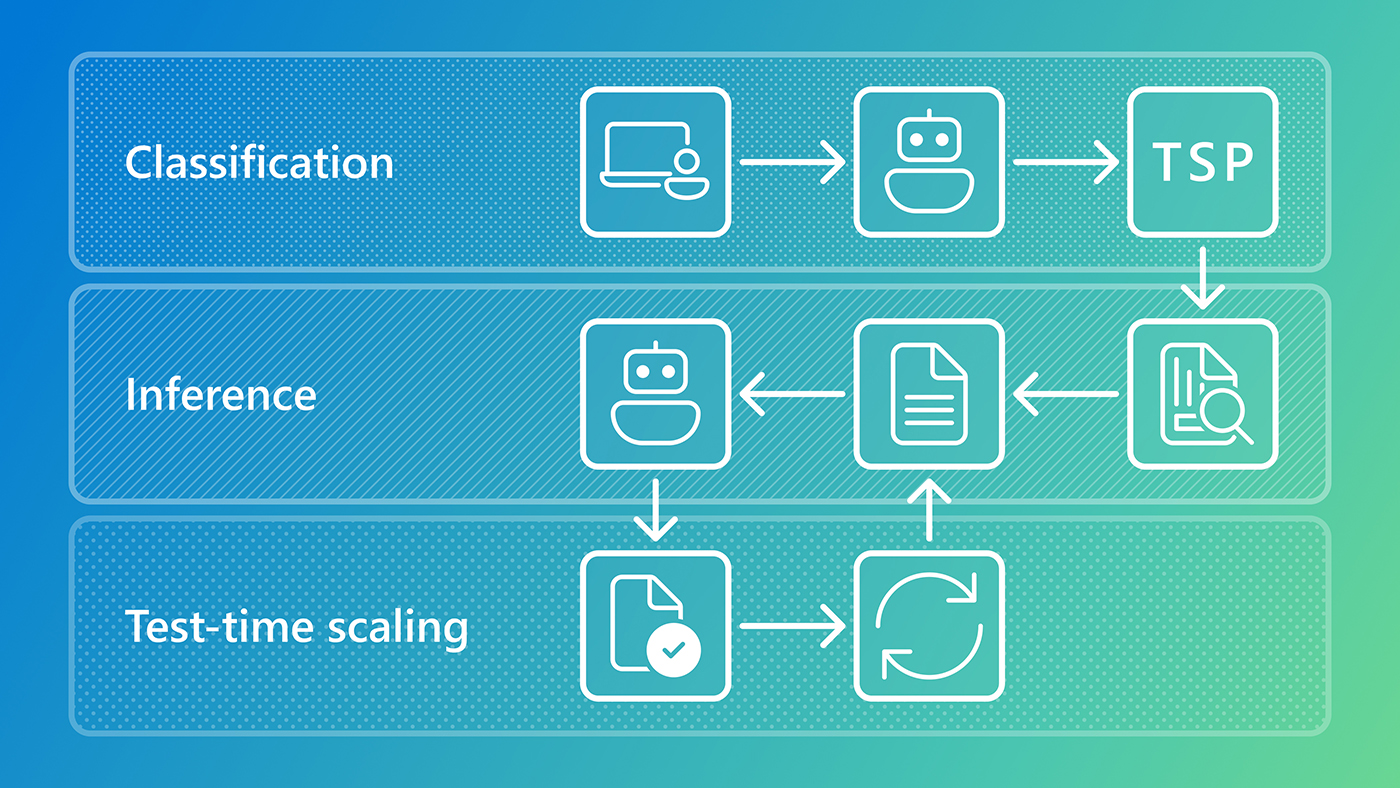
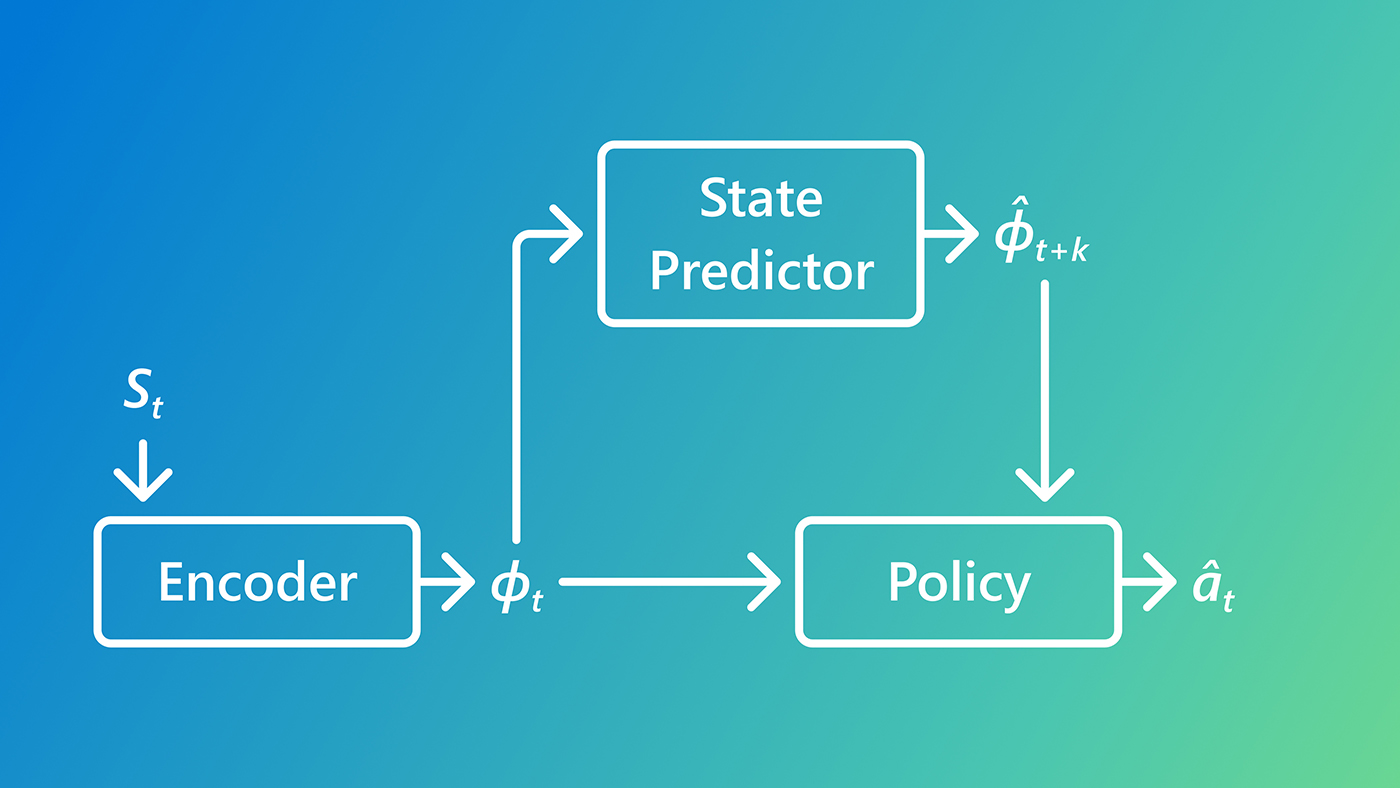
  3. A flowchart with three horizontal sections on a blue-to-green gradient background. The first section, labeled “Classification,” shows icons of a computer, an arrow pointing to a robot face, and another arrow pointing to a box labeled “TSP.” The second section, labeled “Inference,” displays a robot icon connected by arrows to two document icons, one of which includes a magnifying glass. The third section, labeled “Test-time scaling,” shows a document with a checkmark connected by an arrow to a circular refresh icon. Arrows indicate the flow between sections, starting from Classification to Inference and then to Test-time scaling.

    OptiMind: A small language model with optimization expertise 

    January 15, 2026

    OptiMind is a small language model that converts business operation challenges, described naturally, into mathematical formulations that optimization software can solve. It reduces formulation time & errors & enables fast, privacy-preserving local use.

  4. Three white line icons on a blue-to-green gradient background: a computer monitor with a globe symbol on the left, a cursor arrow with click lines in the center, and a computer mouse outline on the right.

    Fara-7B: An Efficient Agentic Model for Computer Use 

    November 24, 2025

    Fara-7B is our first agentic small language model for computer use. This experimental model includes robust safety measures to aid responsible deployment. Despite its size, Fara-7B holds its own against larger, more resource-intensive agentic systems.

Explore More

  • Events & conferences

    Events & conferences 

    Meet our community of researchers, learn about exciting research topics, and grow your network

  • Podcasts

    Podcasts 

    Ongoing conversations at the cutting edge of research

  • Microsoft Research Forum

    Microsoft Research Forum 

    Join us for a continuous exchange of ideas about research in the era of general AI