Microsoft Research Blog

Deep InfoMax: Learning good representations through mutual information maximization 

May 1, 2019 | Devon Hjelm, Philip Bachman, and Adam Trischler
As researchers continue to apply machine learning to more complex real-world problems, they’ll need to rely less on algorithms that require annotation. This is not only because labels are expensive, but also because supervised learners trained only to predict annotations tend not to generalize beyond…

Recent Posts

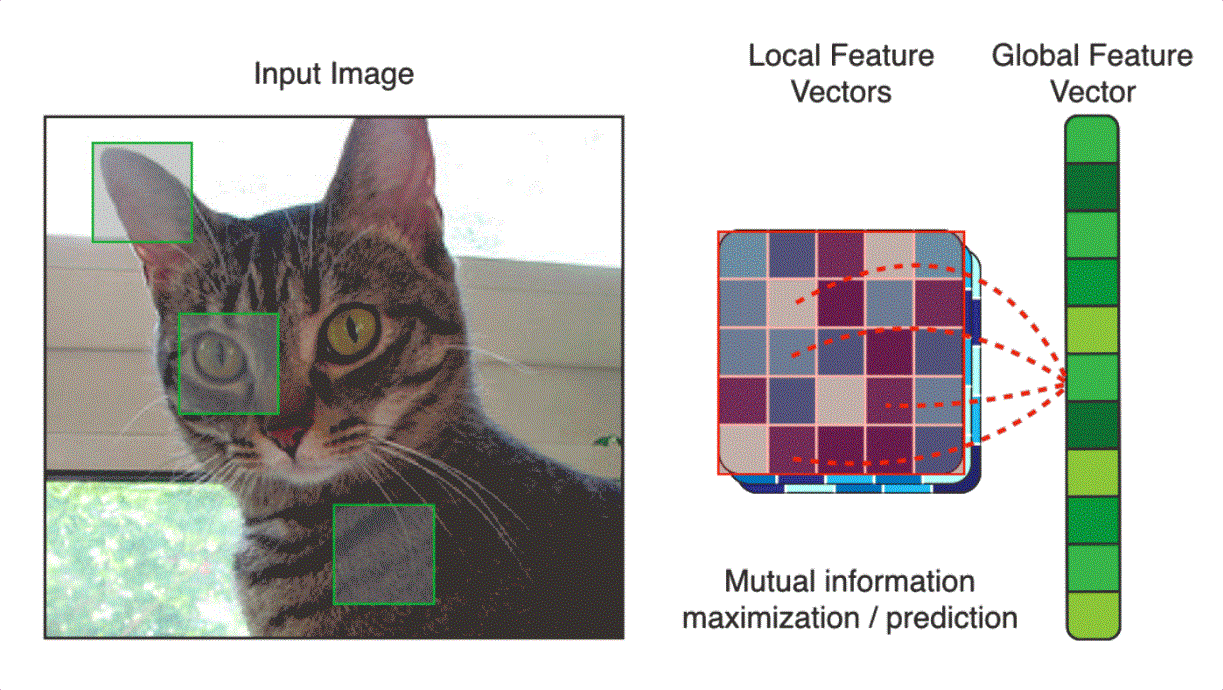
  1. mutual information maximization prediction

    Deep InfoMax: Learning good representations through mutual information maximization 

    May 1, 2019 | Devon Hjelm, Philip Bachman, and Adam Trischler

    As researchers continue to apply machine learning to more complex real-world problems, they’ll need to rely less on algorithms that require annotation. This is not only because labels are expensive, but also because supervised learners trained only to predict annotations tend not to generalize beyond…

  2. 2019 Faculty Fellows

    Investing in leading minds—Microsoft Research Faculty Fellowship 

    April 30, 2019 | Sandy Blyth

    How does a leading research institution ensure the flow of computer science talent and keep the most talented minds in the space focused on solving today’s truly challenging problems? The Microsoft Research Faculty Fellowship recognizes innovative, promising new faculty members with $100,000 USD annually for…

  3. a man standing in front of a computer screen

    Toward Emotionally Intelligent Artificial Intelligence 

    April 30, 2019 | Daniel McDuff and Ashish Kapoor

    Recent successes in machine intelligence hinge on core computation ability to efficiently search through billions of possibilities in order to make decisions. Sequences of decisions, if successful, often suggest that perhaps computation is catching up to–or even surpassing–human intelligence. Human intelligence, on the other hand,…

  4. How to better design AI – from ideation to user perception and acceptance 

    April 26, 2019 | Mihaela Vorvoreanu, Saleema Amershi, Justin Cranshaw, and Shamsi Iqbal

    Designing artificial intelligence systems and features poses new challenges for user experience (UX) practitioners. Traditionally, UX designers rely on sketching and low-fidelity, fast prototyping to imagine and test their ideas. The usual design tools and techniques, however, can’t always meet the demands of designing AI-infused…

  5. Advancing accessibility on the web, in virtual reality, and in the classroom 

    April 18, 2019 | Meredith Ringel Morris

    At the ACM CHI Conference on Human Factors in Computing Systems conference in Glasgow, Scotland this May, researchers from Microsoft’s Redmond and UK labs, together with our university collaborators, will be presenting several papers and demos that explore how to design technologies more inclusively, to…

  6. Making ‘micromoments’ work for you 

    April 12, 2019 | Shamsi Iqbal

    Imagine you’ve been asked to write a crucial document for your company, perhaps a detailed outline of its long-term strategy. You’re excited, but don’t know when you’ll find the time to write it. As you sit in a meeting later that day, waiting for the…

  7. Rapidly enabling autonomy at scale with simulation 

    April 8, 2019 | Ashish Kapoor

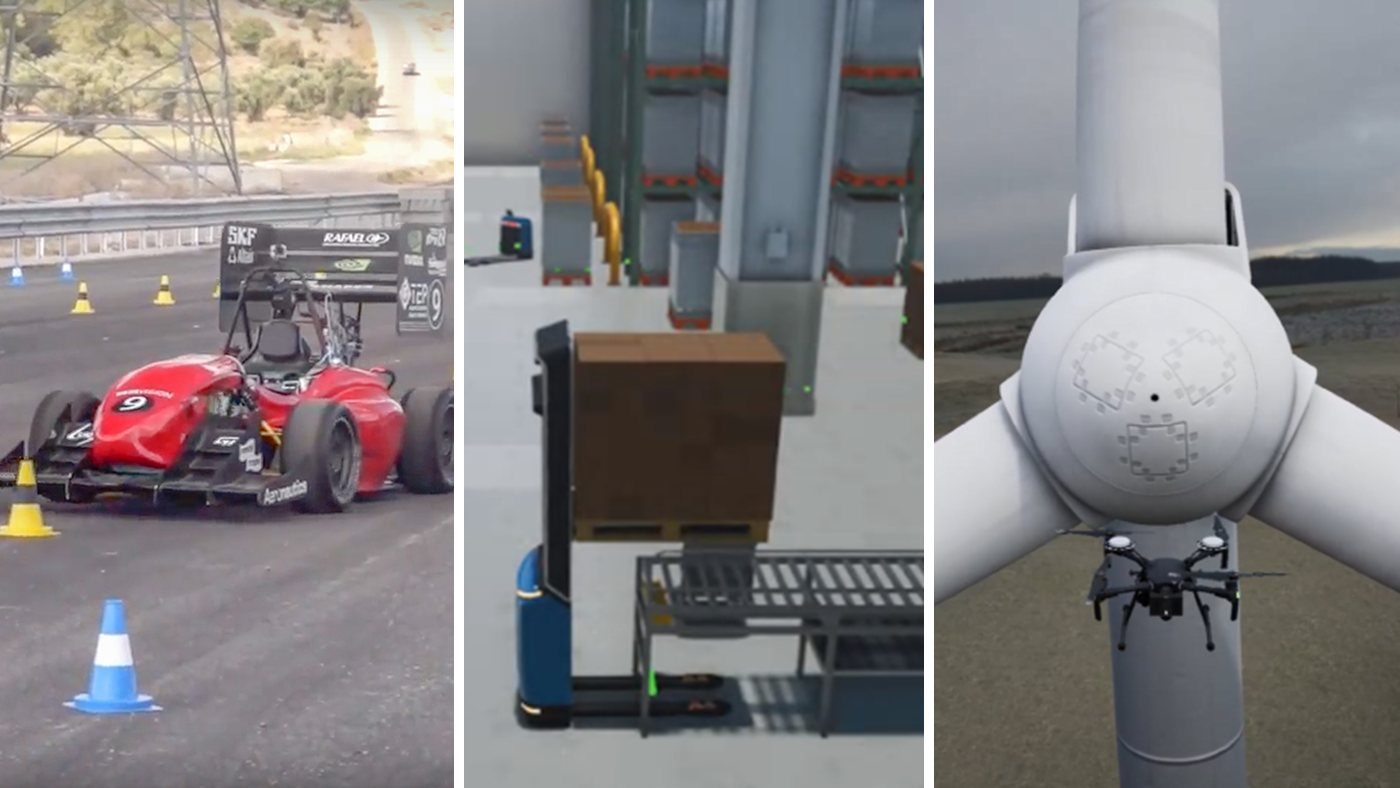
    Autonomous Systems have attracted a lot of attention as they promise to improve efficiency, reduce cost and most importantly take on tasks that are too dangerous for humans. However, building a real-world autonomous system that would operate safely at scale is a very difficult task.…

  8. EverCrypt cryptographic provider offers developers greater security assurances 

    April 2, 2019 | Jonathan Protzenko and Bryan Parno

    Project Everest is a multiyear collaborative effort focused on building a verified, secure communications stack designed to improve the security of HTTPS, a key internet safeguard. This post, about the high-performance industrial-grade EverCrypt cryptographic provider, is the second in a series exploring the groundbreaking work,…

  9. a man sitting in front of a laptop

    Advancing Human-Centered AI 

    March 18, 2019 | Eric Horvitz

    We’re excited about the formal launch of the Stanford Institute for Human-Centered Artificial Intelligence (HAI) on Monday, March 18th. We resonate with Fei-Fei Li, John Etchemendy, and other leaders at Stanford on the promise of taking an interdisciplinary approach to AI, on a pathway guided…

Explore More

  • Events & conferences

    Events & conferences 

    Meet our community of researchers, learn about exciting research topics, and grow your network

  • Podcasts

    Podcasts 

    Ongoing conversations at the cutting edge of research

  • Microsoft Research Forum

    Microsoft Research Forum 

    Join us for a continuous exchange of ideas about research in the era of general AI