

Anja Thieme
Principal Researcher
About
I’m a Principal Research in Human-Centred AI at Microsoft Research Cambridge (opens in new tab) (UK), where I co-lead the Teachable AI Experience team (TAIX). Our mission is to create new human-AI interactions that empower individuals and communities to participate not only in the design and evaluation of innovative AI systems, but also influence the very foundations of underlying models through deeper human involvement in AI data practices and model pipelines. We strive to enable people to develop their own, more effective AI tools, and to create more inclusive AI experiences.
More broadly – working within a collaborative, multi-disciplinary environment – this work enables me to define strategies and processes to apply a human-centred approach to the safe, effective and ethical development of AI. A central focus of my work is the creation of new tools and other resources for human participation; driving mindshare to promote social inclusion and the adoption of responsible AI practices; and advancing public understanding and policy.
For more information, please visit my homepage: https://designandwellbeing.com/ (opens in new tab)
Past projects at Microsoft include:
- Project MAIRA leverages advanced, multimodal AI models to enhance radiology workflows and support radiologists in improving patient care and outcomes.
- Project Talia investigated the use of ML models to improve the quality of care delivered through online psychotherapy programs (specifically CBT).
- Project Tokyo developed an interactive, computer-vision based system to extend the capabilities of people with vision impairments.
- Project Torino, and its commercialized counterpart Code Jumper (opens in new tab), provide a collaborative learning environment for teaching coding to children independent of their visual abilities.
- Disruptive Displays explored new ways to design and configure digital displays as flexible, reconfigurable materials that can be cut, folded and externally imaged.
Featured content
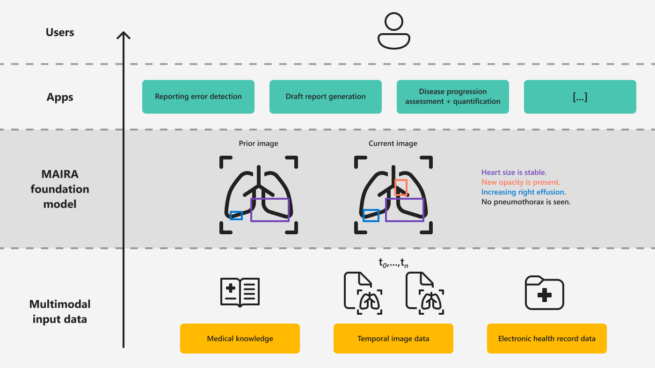
Project MAIRA
Project MAIRA is a research project from Microsoft Health Futures that builds innovative, multimodal AI technology to assist radiologists in delivering effective patient care and to empower them in their work.
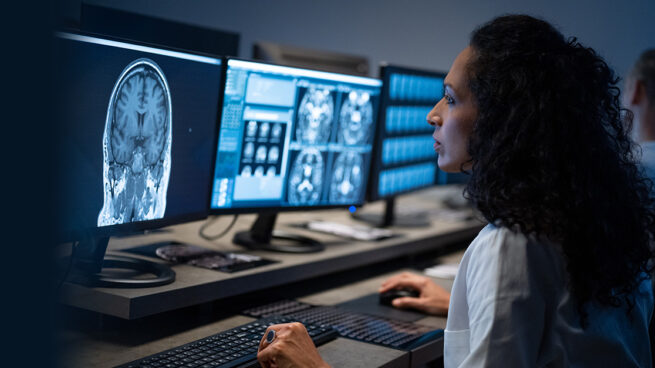
GPT-4's potential in shaping the future of radiology
This research paper is being presented at the 2023 Conference on Empirical Methods in Natural Language Processing (EMNLP 2023), the premier conference on natural language processing and artificial intelligence. In recent years, AI has been increasingly integrated into healthcare, bringing…
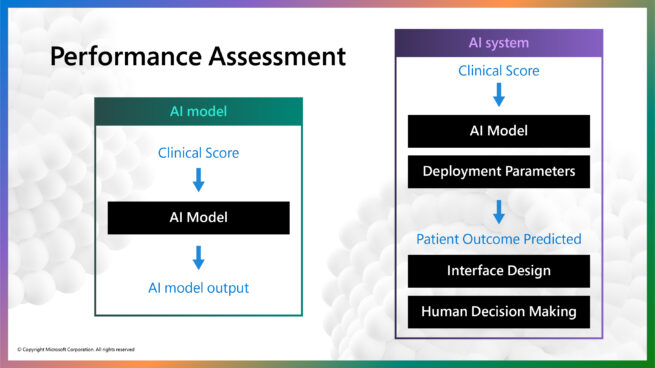
AI Models vs. AI Systems: Understanding Units of Performance Assessment
As AI becomes more deeply integrated into every aspect of our lives, it is essential that AI systems perform appropriately for their intended use. We know AI models can never be perfect, so how do we decide when AI performance…