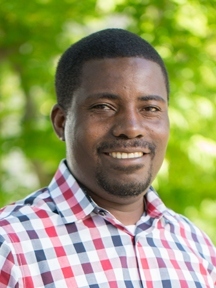
Andrew Phillips
Head of Biological Computation Group
About
I am currently developing methods and software for understanding and programming information processing in biological systems. One of my long-term aims is to develop a platform for programming biological systems that combines programming languages, compilers, lab automation and machine learning, running at scale on cloud infrastructure.
News
Novartis and Microsoft announce collaboration to transform medicine with artificial intelligence. Microsoft News, 1 October 2019. Novartis and Microsoft join forces to develop drugs using AI. Financial Times, 1 October 2019. Microsoft makes splash in AI-enabled lab solutions. Nature Biotechnology, 8 July 2019. Microsoft moves into biological computing with Station B. Financial Times, 12 March 2019. Oxford BioMedica Looks to Cut Costs of Gene Therapies With Microsoft Collaboration. Wall Street Journal, 12 March 2019. Microsoft partners with biotech on ‘biological computing’ and cell DNA programming. FierceBiotech, 12 March 2019. Microsoft…
Featured content
Programming biology with Dr. Andrew Phillips
Episode 67, March 13, 2019 - Today, Dr. Phillips talks about the challenges and rewards inherent in reverse engineering biological systems to see how they perform information processing. He also explains what we can learn from stressed out bacteria, and tells us about Station B, a new end-to-end platform his team is working on that aims to reduce the trial and error nature of lab experiments and help scientists turn biological cells into super-factories that could solve some of the most challenging problems in medicine, agriculture, the environment and more.
Researchers build nanoscale distributed DNA computing systems from artificial protocells
Living cells communicate with each other by sending and receiving molecular signals that diffuse between neighboring cells to activate key molecular processes. This communication enables cell populations to implement collective information processing functions that cannot be achieved by individual cells…
Scientists discover how bacteria use noise to survive stress
Noisy expression of stress response in microcolony of E. coli. Mutations in the genome of an organism give rise to variations in its form and function—its phenotype. However, phenotypic variations can also arise in other ways.…
Scientists use machine learning to predict DNA binding rates from sequence
By Microsoft Research Lab - Cambridge and Department of Bioengineering, Rice University The binding of DNA strands by Watson-Crick base pairing is a fundamental process in biotechnology, which…
Researchers build nanoscale computational circuit boards with DNA
By Microsoft Research Human-engineered systems, from ancient irrigation networks to modern semiconductor circuitry, rely on spatial organization to guide the flow of materials and information. Living cells also use spatial organization to control and accelerate the transmission of molecular signals,…