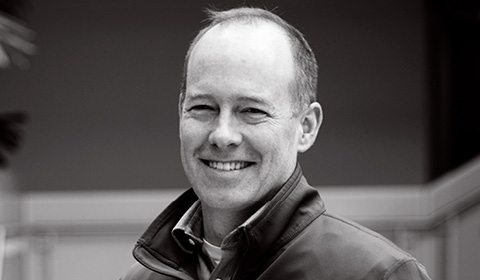

Doug Burger
Technical Fellow and Corporate Vice President
About
Doug Burger is a Technical Fellow and Corporate Vice President at Microsoft, serving as Managing Director of Microsoft Research’s worldwide core research labs. He oversees a global organization of over 700 researchers and engineers, steering Microsoft Research to generate strategic breakthroughs in artificial intelligence and computer science.
Doug received his BS in Computer Science from Yale University (1991) and his MS/PhD in Computer Science from the University of Wisconsin-Madison (1993/1998). From 1998 to 2008 he was on the Computer Sciences faculty at the University of Texas at Austin, where he co-led a research lab that produced influential innovations in computer architecture. He published his first paper on AI hardware acceleration in 2000. Today, hundreds of millions of microprocessors worldwide contain technologies invented in his laboratory, including non-uniform cache architectures (NUCA caches), recognized by the 2026 ASPLOS Distinguished Paper Award. At UT-Austin also he co-led the TRIPS project, a novel spatial dataflow architecture. That work was recognized by the 2024 ISCA Influential Paper Award for having significant influence on the field of computer architecture.
In 2008 Microsoft recruited him to lead the Computer Architecture group in Microsoft Research. From 2008 to 2018 he led research teams that pioneered advanced large-scale system designs, including Brainwave (ultra-efficient AI acceleration for Bing and Office), Azure Accelerated Networking, and the Catapult FPGA platform. Every server deployed in Microsoft’s cloud now incorporates a hardware platform designed by his team. This infrastructure, deployed by Microsoft in the 2010s, contained early at-scale Data Processing Units (DPUs), fabrics of accelerators connected by a logical back-end network, and deep neural networks pinned in on-chip SRAM across multiple accelerators for boosted throughput. All of these innovations are in wide-spread use today. Finally, his team also developed the Kanagawa language and open sourced it 2025, enabling efficient hardware design done by a language with high-level semantics.
In 2018, Doug moved with his team into Azure to co-found the custom hardware division, where he served as an engineering executive designing AI supercomputers for Microsoft’s cloud. During that time he and members of his team developed the concept of microscaling quantization, realized in a standardized numeric format called MX (4, 6, and 8-bit datatypes). These formats define ultra-efficient numerics for AI and have been widely adopted by the industry. They drive large efficiency gains in Nvidia’s Blackwell chips and are expected to save the technology industry tens to hundreds of billions of dollars in AI serving costs.
In 2023, Doug returned to Microsoft Research as Managing Director of Microsoft Research core labs. He hosts the Microsoft Research podcast series “The Shape of Things to Come,” exploring how AI is reshaping the future. In addition to his managerial role, he is a prolific researcher and inventor; his research has been cited over 44,000 times, and he is a co-inventor on more than 100 U.S. Patents. For his early work, he received the 2006 ACM Maurice Wilkes Award and is a Fellow of both the ACM and the IEEE. In 2026 he was elected to the US National Academy of Engineering for accelerating cloud-scale computing and networking infrastructures with field-programmable systems.