MSR Overview: Introduction & Logistics, Overview, Data-Intensive Science: The 4th Paradigm); Tech Survey: Worldwide Telescope, Chronozoom & Digital Humanities, Surface Research, Microsoft Academic Search
- Lee Dirks, Peter Lee, Tony Hey, Curtis Wong, Donald Brinkman, Andy Wilson, and Adnan Mahmud | Microsoft, MSR, Microsoft Research, Research Prgrm Manager, Research Program Manager
11:15 -12:00 WELCOME
MSR Overview: Introduction & Logistics, Overview, Data-Intensive Science: The 4th Paradigm)
- Welcome / Lee Dirks – Director, Education & Scholarly Communications
- “MSR Overview” / Peter Lee – Distinguished Scientist & Managing Director, MSR Redmond
- “Data-Intensive Science: Implications for Research Libraries” / Tony Hey – Corporate Vice President, Microsoft Research Connections
12:00 – 1:20 SESSION #1
Tech Survey: Worldwide Telescope, Chronozoom & Digital Humanities, Surface Research, Microsoft Academic Search
- “Worldwide Telescope” / Curtis Wong –Principal Researcher, MSR
- “ChronoZoom” / Donald Brinkman – Research Prgrm Manager, MSR Connections
- “Surface & Touch Research” / Andy Wilson – Senior Researcher, MSR
- “Academic Search” / Adnan Mahmud – Research Program Manager, MSR Asia
Speaker Details
Peter Lee joined Microsoft as a Distinguished Scientist and Managing Director of Microsoft Research Redmond (MSR-R) in September 2010. He comes to Microsoft from the Defense Advanced Research Projects Agency (DARPA) where he served as the founding director of the Transformational Convergence Technology Office. DARPA is the principal agency within the U.S. Department of Defense for research, development and demonstration of high-risk, high-payoff projects for the current and future combat force. In this role, Peter was responsible for developing and implementing the strategic vision and technical plans for a new office in support of DARPA’s mission: to maintain the technological superiority of the U.S. military and prevent technological surprise from harming national security by sponsoring revolutionary research, bridging the gap between fundamental discoveries and their military use. Prior to DARPA, Peter was a professor and head of the Computer Science Department at Carnegie Mellon University (CMU), having also served briefly as the Vice Provost for Research. He joined the CMU faculty in 1987, after completing his doctoral studies at the University of Michigan.
Peter is an active researcher, educator, administrator, and servant to the academic community. His research contributions lie mainly in areas related to the foundations of software reliability, program analysis, security, and language design. He is a former Chair of the Board of Directors of the Computing Research Association and its Government Affairs Committee. He is the author of two books, authored or co-authored more than 50 refereed papers, and has advised or co-advised 14 completed Ph.Ds. Peter has received numerous awards for his research, including the Special Interest Group on Operating Systems Hall of Fame Award for the most influential paper from OSDI; the Association for Computing Machinery’s Special Interest Group on Programming Most Influential Programming Language Design and Implementation Paper; the Allen Newell Award for Research Excellence in Computer Science for Proof-Carrying Code; and the 1994 Herbert A. Simon Award for Teaching Excellence in Computer Science.
As corporate vice president of the External Research Division of Microsoft Research, Tony Hey is responsible for the worldwide external research and technical computing strategy across Microsoft Corporation. He leads the company’s efforts to build long-term public-private partnerships with global scientific and engineering communities, spanning broad reach and in-depth engagements with academic and research institutions, related government agencies and industry partners. His responsibilities also include working with internal Microsoft groups to build future technologies and products that will transform computing for scientific and engineering research. Hey also oversees Microsoft Research’s efforts to enhance the quality of higher education around the world.
Before joining Microsoft, Hey served as director of the U.K.’s e-Science Initiative, managing the government’s efforts to provide scientists and researchers with access to key computing technologies. Before leading this initiative, Hey worked as Head of the School of Electronics and Computer Science; and, Dean of Engineering and Applied Science at the University of Southampton, where he helped build the department into one of the most respected computer science research institutions in England.
His research interests focus on parallel programming for parallel systems built from mainstream commodity components. With Jack Dongarra, Rolf Hempel and David Walker, he wrote the first draft of a specification for a new message-passing standard called MPI. This initiated the process that led to the successful MPI standard of today.
Hey is a fellow of the U.K.’s Royal Academy of Engineering. He also has served on several national committees in the U.K., including committees of the U.K. Department of Trade and Industry and the Office of Science and Technology. He was a member of the British Computer Society, the Institute of Engineering and Technology, and the Institute of Physics.
Tony Hey also has a passionate interest in communicating the excitement of science to young people. He has written ‘popular’ books on quantum mechanics and on relativity.
Hey is a graduate of Oxford University, with both an undergraduate degree in physics and a doctorate in theoretical physics.
Curtis Wong is Principal Researcher focusing on interaction, media, and visualization technologies. He has authored more than 45 patents pending in areas such as interactive television, media browsing, visualization, search, gaming and learning. He is also co-author of Microsoft’s 5,000th patent in 2006 and 10,000th patent in 2009. He and his collaborators have built advanced prototypes which have influenced Microsoft products and have been featured in numerous executive keynotes on the future of computing.
He spends some of his time working with selected non-profit organizations to develop examples of next generation media such as his collaboration with WGBH Frontline to produce The Age of AIDS on the global AIDS pandemic and the broadband enhanced documentary Commanding Heights ~ The Battle for the World Economy, winning a British Academy Award and nominated for the first interactive TV Emmy.
His most recent project was Project Tuva which features the highly regarded 1964 Messenger Series lectures of Nobel Prize winning Physicist Richard Feynman within a unique interactive rich media player. Users can experience the lectures with rich interactive simulations and related content.
The WorldWide Telescope www.worldwidetelescope.org featuring the largest collection of the highest resolution ground and space based imagery ever assembled into a single learning environment inspiring millions of kids around the world to explore and understand the Universe.
Prior to Microsoft in 1997, Curtis was Director of Intel Productions where he conceived and developed www.artmuseum.net the first Broadband blockbuster art museum exhibition network on the Web. Curtis was also responsible for creation of the first enhanced digital television program broadcast in the US – The Poetry of Structure accompanying the broadcast of the Ken Burns film Frank Lloyd Wright. Prior to Intel, Curtis was General Manager of Corbis Productions where he was responsible for the creation of a critically acclaimed series of CD-ROM’s including: A Passion for Art , Critical Mass, FDR and Leonardo da Vinci. Before Corbis, Curtis was producer for the Voyager Company where he was responsible for Multimedia Beethoven and Amanda Stories – two of the first ten multimedia CD-ROM’s for the PC as well as a number of award winning feature films for the Criterion Collection.
Curtis has served on numerous not for profit boards including the Seattle Art Museum, the Rhode Island School of Design, PBS Kids in Washington D.C., Ovation – The Arts Network, PBS Online and as served as an advisor to the The Corporation for Public Broadcasting, the Strategic Planning Steering Committee for the National Constitution Center, the Canadian Film Centre, American Film Institute, and the Barnes Foundation. He is a voting member of the Academy of Television Arts and Sciences (Emmys), a member of the American Astronomical Society. Curtis is included in Richard Saul Wurman’s book, Who’s Really Who: 1000 Most Creative Individuals in the USA as well as Interactive Week’s roster of “the 50 most powerful people in the interactive industry.”
-
-

Adnan Mahmud
-

Andy Wilson
Partner Research Manager
-
Donald Brinkman
Research Program Manager
-
Jeff Running
-

Lee Dirks
Director, Portfolio Strategy
-

Peter Lee
President, Microsoft Science
-
Tony Hey
-
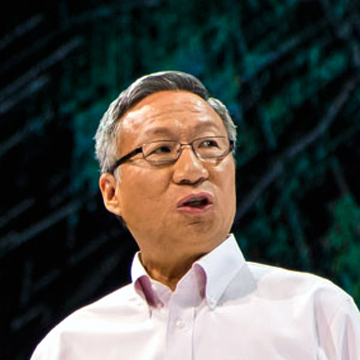
Curtis Wong
Principal Researcher
-


Watch Next
-
-
Dion2: A new simple method to shrink matrix in Muon
- Anson Ho,
- Kwangjun Ahn
-
-
-
-
-
-
-
-