

Security, privacy, and cryptography



Microsoft Research Blog
Reducing Privacy leaks in AI: Two approaches to contextual integrity
New research explores two ways to give AI agents stronger privacy safeguards grounded in contextual integrity. One adds lightweight, inference-time checks; the other builds contextual awareness directly into models through reasoning and RL.

Publication
CHERI-Lite for Memory Safety Exploit Mitigation
Video
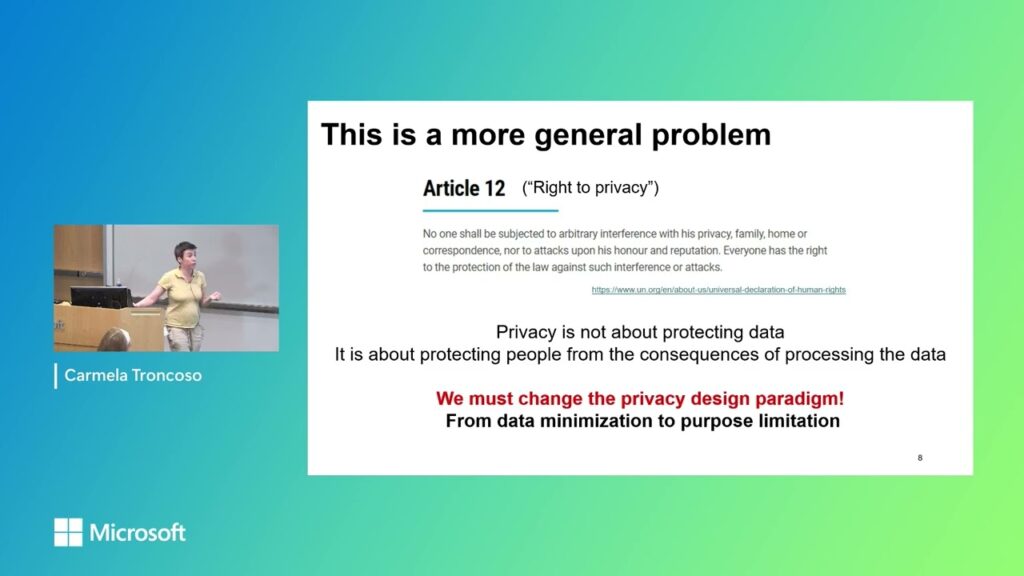
Designing safe digital systems for the humanitarian sector
Speaker: Carmela Troncoso Host: Betül Durak In this talk we overview our collaboration with the International Committee of the Red Cross, in which we help them to digitalize their aid distribution process without increasing risks…
Microsoft Research Blog
BlueCodeAgent: A blue teaming agent enabled by automated red teaming for CodeGen AI
BlueCodeAgent is an end-to-end blue-teaming framework built to boost code security using automated red-teaming processes, data, and safety rules to guide LLMs’ defensive decisions. Dynamic testing reduces false positives in vulnerability detection.

Video
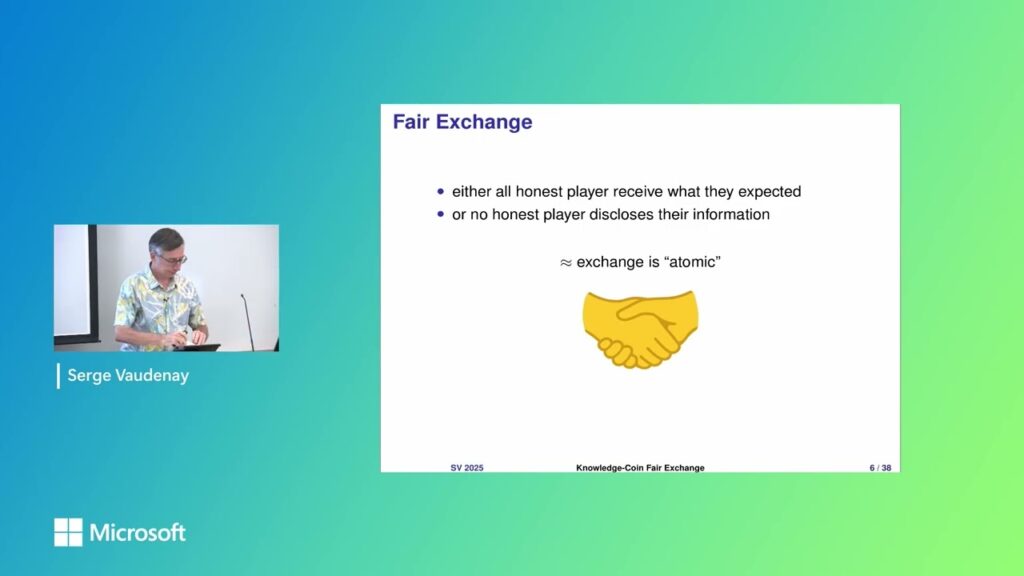
Knowledge-Coin Fair Exchange
Fair exchange has been studied in computer science for many decades. The problem consists of enabling two participants to exchange digital information in a way which is fair, even when one may be malicious. The…
Career Opportunity
Research Intern – Security Research Group, Microsoft Research Redmond
The Security Research Group at Microsoft Research Redmond works on a variety of areas to ensure computer systems are secure and trustworthy. Its current work investigates systems that leverage general software/systems security, confidential computing, formal…
Career Opportunity
Research Intern – Fundamentals of AI: Security, Agents, Systems & Control
We are seeking multiple Research Interns to work with researchers in Microsoft Research Special Projects and the Deep Learning Group, alongside partner product teams, to advance core AI research across security, agentic workflows, and next‑generation…
Career Opportunity
Research Intern – MSR Systems Research Group – Redmond
The Systems Research Group in Microsoft Research is devoted to advancing the state of the art in distributed systems and operating systems. Our aim is to make systems verifiably correct, scalable, fault-tolerant, manageable, fast and…
Microsoft Research Blog
RedCodeAgent: Automatic red-teaming agent against diverse code agents
Code agents help streamline software development workflows, but may also introduce critical security risks. Learn how RedCodeAgent automates and improves “red-teaming” attack simulations to help uncover real-world threats that other methods overlook.