About
The coronavirus pandemic has significantly disrupted information work across the globe. The rapid and prolonged shift to remote work from home is producing transformational change that will undoubtedly have long-term implications. The new reality of distributed information work challenges and inspires us to revolutionize our work practices and technologies to support the sustainable and robust distribution of people, resources, and knowledge.
There is an urgent need for the research community to come together to address the challenges to productivity, wellbeing, and society that people and organizations are facing. The goal of this virtual symposium on The New Future of Work was to provide an open forum to explore where we have come from and to suggest where we should go. It was a venue to share timely and novel research on currently disrupted or evolving work practices, to reflect on how past findings shed light on the current situation, and to prepare for a world in which work may be done very differently.
The event is now over but much of our content is available on-demand:
- The videos for the Opening and Closing Keynotes, the Invited Plenary, and the Inclusion Panel are available on the Open Symposium Content page.
- Most papers are also available for download and many have accompanying video presentations. Please see the Publications page for details.
Event Co-Chairs
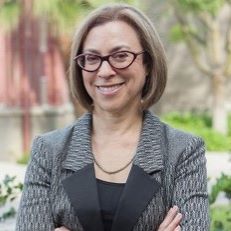
University of California, Irvine

Microsoft
Steering Committee
University College London
Microsoft
Massachusetts Institute of Technology
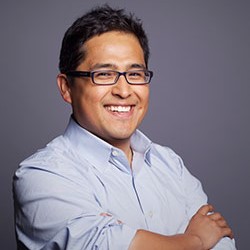
Snap Inc.
University of California, Irvine
Microsoft
University of Victoria
Microsoft
University of California, Santa Cruz

NTT Communication Science Laboratories
Program Committee
-
Microsoft
Co-Chair
University of Minnesota
Co-Chair
| Elena Agapie | University of Washington | |
| Helen Ai He | Dalhousie University | |
| Nancy Baym | Microsoft | |
| Duncan Brumby | University College London | |
| Benjamin Cowan | University College Dublin | |
| Kevin Crowston | Syracuse University | |
| Jesse Dinneen | Victoria University of Wellington | |
| Susan Fussell | Cornell University | |
| Ujwal Gadiraju | Delft University of Technology | |
| Mar Gonzales Franco | Microsoft | |
| Philip Guo | University of California, San Diego | |
| Sonia Jaffe | Microsoft | |
| Prerrna Kapoor | Microsoft | |
| Juho Kim | KAIST | |
| Andrew Kun | University of New Hampshire | |
| Linda Ng Boyle | University of Washington | |
| Eyal Ofek | Microsoft | |
| Mark Rouncefield | Lancaster University | |
| Teddy Seyed | Microsoft | |
| Orit Shaer | Wellesley College | |
| Chirag Shah | University of Washington | |
| John Tang | Microsoft | |
| Denise Wilkins | Microsoft | |
| Alex Williams | University of California, Irvine | |
| Longqi Yang | Microsoft |
Microsoft’s Event Code of Conduct
Microsoft’s mission is to empower every person and every organization on the planet to achieve more. This includes virtual events Microsoft hosts and participates in, where we seek to create a respectful, friendly, and inclusive experience for all participants. As such, we do not tolerate harassing or disrespectful behavior, messages, images, or interactions by any event participant, in any form, at any aspect of the program including business and social activities, regardless of location.
We do not tolerate any behavior that is degrading to any gender, race, sexual orientation or disability, or any behavior that would violate Microsoft’s Anti-Harassment and Anti-Discrimination Policy, Equal Employment Opportunity Policy, or Standards of Business Conduct. In short, the entire experience must meet our culture standards. We encourage everyone to assist in creating a welcoming and safe environment. Please report any concerns, harassing behavior, or suspicious or disruptive activity. Microsoft reserves the right to ask attendees to leave at any time at its sole discretion.
Agenda
Join us on social with #NFW2020
Monday, August 3, 2020 – 9:00 AM-12:00 PM PDT
| Time (PDT) | Session Title | Speaker / Talk Title |
| 9:00 AM–9:05 AM | Welcome | Sean Rintel, Microsoft and Gloria Mark, UC Irvine |
| 9:05 AM–9:10 AM | Opening Keynote Intro | Gloria Mark |
| 9:10 AM–9:55 AM | Opening Keynote Resources |
Susan David, Harvard Medical School Build your Emotional Agility in Turbulent Times with Fireside Chat facilitated by Sean Rintel and Gloria Mark |
| 9:55 AM–10:00 AM | Break | |
| 10:00 AM–10:05 AM | Invited Plenary Intro | Gloria Mark |
| 10:05 AM–11:05 AM | Invited Plenary [Video] |
Judy Olson, UC Irvine How To Make Distance Work Work Alex Soojung-Kim Pang, Stanford University Jim Hollan, UC San Diego Thomas W. Malone, MIT |
| 11:05 AM–11:10 AM | Transition | |
| 11:10 AM–12:00 PM | Attendee Networking | Registered attendees can find details in the Networking channel |
| 12:00 PM | End of Day 1 formal agenda | Optionally continue discussions in Teams channels |
Tuesday, August 4, 2020 – 9:00 AM-12:00 PM
| Time (PDT) | Session Title | Speaker / Talk Title |
| 9:00 AM–9:05 AM | Panel Intro | Sean Rintel and Gloria Mark |
| 9:05 AM–9:55 AM | A Conversation About An Inclusive Future of Work [Video] |
Tawanna Dillahunt, University of Michigan
Stuart Duff, Pearn Kandola Melissa Gregg, Intel Oliver Haimson, University of Michigan |
| 9:55 AM–10:00 AM | Break | |
| 10:00 AM–11:05 AM | Highlighted Talks | Track 1
Facilitator: Gloria Mark Nicholas Bloom, Stanford University Daniel M Ravid, Jerod White, Dave Tomczak, Ahleah Miles & Tara Behrend, George Washington University and Purdue University Vedant Das Swain, Koustuv Saha, Gregory Abowd & Munmun De Choudhury, Georgia Institute of Technology Longqi Yang, Sonia Jaffe, David Holtz, Siddharth Suri, Shilpi Sinha, Jeffrey Weston, Connor Joyce, Neha Shah, Kevin Sherman, CJ Lee, Brent Hecht & Jaime Teevan, Microsoft and MIT Track 2 Facilitator: Sean Rintel Joshua McVeigh-Schultz & Katherine Isbister, SFSU and UC Santa Cruz John Tang, Microsoft Julia Markel & Philip Guo, UC San Diego Saiph Savage & Mohammad Jarrahi, Microsoft and UNC Chapel Hill |
| 11:05 AM–11:10 AM | Break | |
| 11:10 AM–12:00 PM | Themed Discussions | Themed discussions will involve generating visions of research, policy, technology, and practice for specific issues in the New Future of Work.
Accepted papers will form the background for these discussions. Each session will start with prerecorded paper videos being played by a facilitator (with authors answering questions in text chat during their video), followed by the group exploring answers to a short series of questions (which will be provided). To find out which papers have been assigned as background for theme, please see the Themes breakdown. There are two sessions for each theme (one per day on August 4 and 5) and same questions will guide discussion. Participants should feel free to either stay in one theme or move around between themes. To keep the meetings at reasonably equal sizes, we ask participants to sign up for sessions on both days in the General channel of the New Future of Work Symposium team. Communication: Videoconferencing, Virtual Reality, social media, communication contexts, experiences, and practices Education: Experiences, organisations, policies, preparing the workforces of the future Employment: Hiring, onboarding, management, freelancing, on-demand, crowdwork, gig work Hybridity: Blending physical and digital experiences, workspaces, managing local and remote Inclusion: Accessibility, diversity, fairness, accountability, transparency, and ethics Productivity: Collaboration, measurement, practices, information management Remote Work: Working from home, working from anywhere, distributed teams Society: Public policy, business, economics, health, societal implications and confounding factors Wellbeing: Work-life balance, social connection and isolation |
| 12:00 PM | End of Day 2 formal agenda | Optionally continue discussions in Teams channels |
Wednesday, August 5, 2020 – 9:00 AM-12:00PM PDT
| Time (PDT) | Session Title | Speaker / Talk Title |
| 9:00 AM–9:05 AM | Closing Keynote Intro | Sean Rintel |
| 9:05 AM–9:50 AM | Closing Keynote [Video] |
Devon Powers, Temple University Futures for Whom? moderated by Sean Rintel and Gloria Mark |
| 9:50 AM–10:00 AM | Break | |
| 10:00 AM–10:45 AM | Themed Discussions | Accepted papers will form the background for these discussions. Each session will start with prerecorded paper videos being played by a facilitator (with authors answering questions in text chat during their video), followed by the group exploring answers to a short series of questions (which will be provided).
To find out which papers have been assigned as background for theme, please see the Themes breakdown. Communication: Videoconferencing, Virtual Reality, social media, communication contexts, experiences, and practices Education: Experiences, organisations, policies, preparing the workforces of the future Employment: Hiring, onboarding, management, freelancing, on-demand, crowdwork, gig work Hybridity: Blending physical and digital experiences, workspaces, managing local and remote Inclusion: Accessibility, diversity, fairness, accountability, transparency, and ethics Productivity: Collaboration, measurement, practices, information management Remote Work: Working from home, working from anywhere, distributed teams Society: Public policy, business, economics, health, societal implications and confounding factors Wellbeing: Work-life balance, social connection and isolation |
| 10:45 AM–11:00 AM | Individual Reflections | Registered Participants: As a way of helping you record your reflections on the symposium, and also providing the organisers to collate and discuss in the closing plenary, there is a link to an Individual Reflections form in the General channel. If you do not attend the full symposium, send it right before you leave so that your thoughts can be included. We have set aside this 15 minutes, after the final content session, for you to finalise your form, but you can start it anytime beforehand. |
| 11:00 AM–11:15 AM | Break | |
| 11:15 AM-12:00 PM | Closing Plenary | Sean Rintel; Gloria Mark; Shamsi Iqbal, Microsoft; Loren Terveen, University of Minnesota; and other presenters TBC. |
| 12:00 PM | End of Day 3 formal agenda | Optionally continue discussions in Teams channels |
Keynote & Panel
| Speaker | Talk Title | Abstract |
![]() Susan David, Ph.D. Harvard Medical School Connect with Susan: Publications: |
Opening Keynote: Build your Emotional Agility in Turbulent Times |
Emotional Agility is a tool for everyone – now more than ever. In her presentation, Susan will:
Explore the critical habits that enable people to engage, drive culture, team, be resilient, and flourish. Helpful Resources: |
![]() Tawanna Dillahunt, Ph.D., University of Michigan
|
A Conversation About An Inclusive Future of Work
[VIDEO] |
Diversity and Inclusion have become increasingly visible in both academic explorations of work and in the way in which businesses frame the way work should get done. How will we strengthen the importance of understanding and the practical achievement of diversity and inclusion in the New Future of Work? What must we take from prior research so as to not repeat past mistakes? What new challenges and opportunities will arise? In this panel, our experts will present short position statements about diversity and inclusion, to be followed by a moderated discussion between panelists with Q&A from the audience. |
![]() Devon Powers, Ph.D. Temple University Connect with Devon: Publications: |
Closing Keynote: Futures for Whom? [VIDEO] |
Why spend time planning for “the future?” A common answer to that question is that we do so in order to prepare, so that we can be ready for whatever possibilities may unfold. However, we can also think about futures thinking as a technique to manage uncertainty and exert control. Often, talk about the future appears to be opening up options and embracing trends, but actually limits future possibilities and replicates thorny problems of the past and present. This talk will explore some of the approaches to the business of futurism and highlight the importance of thinking broadly and critically about futures planning. It will examine why, in the age of COVID, imagining the future is more necessary than ever, and more fraught. And it will argue that in order to plan resilient, inclusive futures we may need to adjust our lenses and ask different questions about whom our futures are for. |
Themes
Themed discussions will involve generating visions of research, policy, technology, and practice for specific issues in the New Future of Work. Accepted papers will form the background for these discussions. Each session will start with prerecorded paper videos being played by a facilitator (with authors answering questions in text chat during their video), followed by the group exploring answers to a short series of questions.To find out which papers have been assigned as background for theme, please see the Themes breakdown.
As a group, you will explore answers to these questions:
- What are three grand challenges in this topic that can make a difference in this area for the future of work with respect to:
- Technology
- Practice
- Policy
- What are the biggest challenges/obstacles in achieving progress in this area for the future of work?
- What should we be aware of so as not to repeat past mistakes in this area as we think about the future of work?
- What research do you think needs to be done to make progress for the future of work?
Tuesday, August 4, 2020
11:10 AM – 12:00 PM PDT
Wednesday, August 5, 2020
10:00 AM – 10:45 AM PDT
| Theme | Included Papers |
| Communication: Videoconferencing, Virtual Reality, social media, communication contexts, experiences, and practices | |
| Education: Experiences, organisations, policies, preparing the workforces of the future | |
| Employment: Hiring, onboarding, management, freelancing, on-demand, crowdwork, gig work | |
| Hybridity: Blending physical and digital experiences, workspaces, managing local and remote | |
| Inclusion and Assistance: AI Agents, accessibility, diversity, fairness, accountability, transparency, and ethics | |
| Productivity: Collaboration, measurement, practices, information management | |
| Remote Work: Working from home, working from anywhere, distributed teams | |
| Society: Public policy, business, economics, health, societal implications and confounding factors | |
| Wellbeing: Work-life balance, social connection and isolation |
|
Open Symposium Content
Accepted papers, with download links and presentation videos, are available on the Publications page.
The following sessions were made openly available during the symposium and are now available for on-demand viewing. We hope you enjoy!
Join us on social with #NFW2020
Monday, August 3
- 9:00am PDT: Susan David’s Opening Keynote, “Build your Emotional Agility in Turbulent Times”
- 10:00am PDT: Invited Plenary with Judy Olson, Alex Soojung-Kim Pang, Jim Hollan, and Thomas W. Malone [VIDEO]
Tuesday, August 4
- 9:00am PDT: Panel: A Conversation About An Inclusive Future of Work with Tawanna Dillahunt, Stuart Duff, Melissa Gregg, and Oliver Haimson [VIDEO]
Wednesday, August 5
- 9:00am PDT: Devon Powers’ Closing Keynote, “Futures for Whom?” [VIDEO]
HCI Special Issue
Call for Papers for the Special Issue on:
The New Future of Remote Work: Responses to the Pandemic
Andrew Kun
University of New Hampshire
Gloria Mark
HCI
Sean Rintel
Microsoft Research
Abigail Sellen
Microsoft Research
The coronavirus pandemic has significantly disrupted information work across the globe. The rapid and prolonged shift to remote work from home is producing transformational change that will undoubtedly have long-term implications. The new reality of distributed information work challenges and inspires us to revolutionize our work practices and technologies to support the sustainable and robust distribution of people, resources, and knowledge.
There is an urgent need for the research community to come together to address the challenges to productivity, wellbeing, and society that people and organizations are facing. The goal of this special issue on The New Future of Work is to provide a forum to explore where we have come from and to suggest where we should go, if we are to meet these challenges. The issue will showcase timely and novel research on currently disrupted or evolving work practices, to reflect on how past findings shed light on the current situation, and to prepare for a world in which work may be done very differently.
We seek two kinds of contributions:
Novel research: Recently completed research (including findings, design concepts, or prototypes) about work relating to the COVID-19 pandemic. This research should be original and should involve data directly drawn from or highly relevant to the changed global work situation arising from COVID-19.
Position statements: Overviews that explore how prior research is relevant to, or might be tested in the light of, the COVID-19 pandemic.
Contributions should include clear calls to action for research, development, or policy. Given the publication of this special issue in mid 2021, authors should ensure that their contribution identifies important long term issues and recommendations.
Topics
We encourage submissions on a range of topics related to the impact of the current global work situation on distributed information work and technologies, including but not limited to:
Accessibility and inclusion: How might work be affected for populations that have specific assistive requirements or those that have limited access to digital services?
Attention: In an already attention-strained world of work, what new challenges arise from hybrid and remote attempts to enable both focused and peripheral attention on one’s own tasks, work, and goals, and those of one’s group, colleagues, and social network?
Employment, including hiring, onboarding, management, and freelancing: How might both digital and physical services offer new possibilities for employment, and what challenges will be faced?
Fairness, accountability, transparency, and ethics: How might AI assist users and offer enhanced insights for both hybrid and remote work, balancing the need for efficiency and exploration with fairness and sensitivity to users? How might intelligent agents provide trusted support for individuals and organisations?
Managing hybrid and all-remote teams: What special challenges and opportunities might arise to change the nature of management of differentially-distributed teams? How do we facilitate distributed social connection and overcome isolation?
Media and social media influence: How is the new future of work described and made visible in traditional and social media, and what impact might that have on work and wellbeing?
Hybrid and fully remote meetings, and events: How will the differential distribution of people and resources change the way in which live engagement operates, from one-on-one to large events? What disruptive technologies are needed to ensure that remote participants in hybrid scenarios are included? What opportunity and challenges arise in a range of real-time meeting technologies, from traditional video-mediated collaboration to new virtual, mixed, and cross-reality systems? How might they be made robust enough to cope with dramatic changes in usage numbers?
Physical workspaces: How might physical workspaces be redesigned to cope with both a range of ‘new normal’ outcomes but also be ready for emergencies?
Privacy and security: What new privacy and security needs arise from differentially-distributed workers and resources?
Productivity within and across work roles and domains: How well do we understand productivity and how to measure it? What opportunities exist to redefine productivity from received models and theories? Do we need to reinterpret wellbeing and work-life balance, especially in ways that encompass periods of dramatic change?
Societal implications and confounding factors: What are the wider societal implications for technological changes proposed to cope with both ‘new normal’ and emergency conditions of work? What new forms of public policy related to hybrid and remote work need to be developed?
We encourage submissions from a variety of fields with a clear and relevant link to distributed information work and technologies, including but not limited to:
- Computer Supported Cooperative Work
- Communication
- Data and Information Sciences
- Design Research
- Economics
- Human-Centered AI
- Human-Computer Interaction
- Human Geography
- Machine Learning
- Management and Organisational Sciences
- Privacy and Security
- Psychology
- Sociology
Timeline
- Short Proposals due: 28th September 2020
- Response to authors: 19th October 2020 (3 week turn-around)
- Full papers due: 10th January 2021 (2.5 month turn-around)
- Reviews to authors: 10th April 2021 (3 month turn-around)
- Revised papers due: 10th June 2021 (2 month turn-around)
- Reviews to authors: 10th August 2021 (2 month turn-around)
- Final papers due: 10th September 2021 (1 month turn-around)
Submission of Proposals
To help authors find a good fit, we will solicit proposals. Proposals should be about 1000 words and provide a clear indication of what the paper is about. Please use the template provided on the journal website. Proposals will be evaluated for relevance to the special issue theme, and feedback will be given. Both proposal and full paper submissions should be submitted to the HCI Editorial site (mc.manuscriptcentral.com/hci). Follow the guidelines and instructions for submissions on the site. There is a place on the submission site to note that your submission is for the special issue.
Full paper Special Issue submissions will be peer reviewed to the usual standards of the HCI journal.
For questions about the special issue, please send mail to si.hci.fow@gmail.com.


